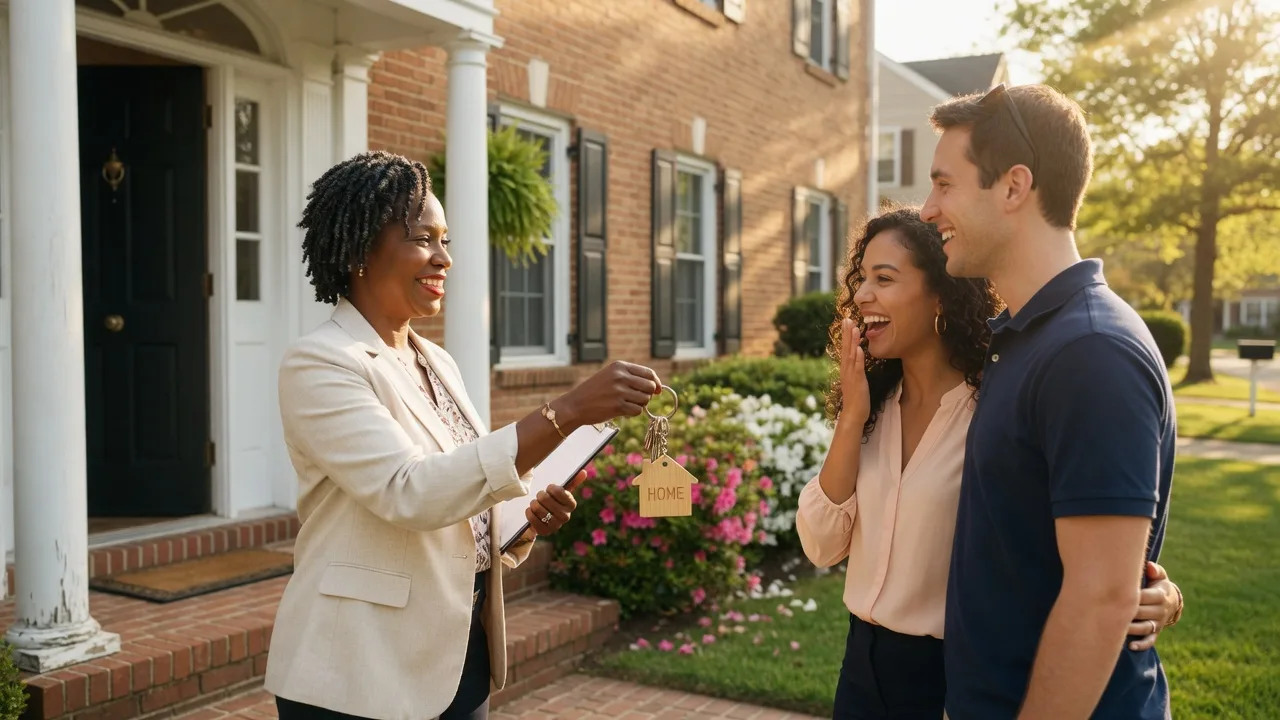
Buying a home in South Jersey is one of the biggest financial decisions you will ever make, and the process can feel overwhelming if you do not know what to expect. This step-by-step guide walks you through every stage of the home buying journey in Burlington County and beyond, from getting pre-approved for a mortgage to walking through the door on closing day. Whether you are a first-time buyer or have been through the process before, this guide will help you move forward with confidence.
I have helped over 636 families buy and sell homes across South Jersey, and I know firsthand how complex the process can be. This guide is designed to give you a clear road map so you know exactly what happens at each stage, what questions to ask, and how to make informed decisions without feeling pressured.
Quick Overview: The 6 Main Stages
- Pre-Approval - Determine your budget and get lender approval
- Find the Right Home - Search, tour, and choose your neighborhood
- Make an Offer - Negotiate terms and contingencies
- Home Inspection & Due Diligence - Inspect, test, and negotiate repairs
- Appraisal & Final Loan Approval - Confirm value and secure financing
- Closing Day - Sign documents, pay costs, and get your keys
1. Getting Pre-Approved for a Mortgage
The home buying process in South Jersey starts long before you visit a single open house. The single most important step you can take is getting pre-approved for a mortgage. A pre-approval letter from a lender tells you exactly how much you can borrow, demonstrates to sellers that you are a serious and qualified buyer, and helps you avoid the disappointment of falling in love with a home outside your budget.
In competitive Burlington County markets, sellers will not consider an offer from a buyer who has not been pre-approved. Getting pre-approved before you start touring homes gives you a real advantage.
Why Pre-Approval Matters
It sets your price range. A pre-approval shows you exactly how much a lender is willing to lend you based on your income, credit, assets, and debts. This prevents you from wasting time looking at homes you cannot afford.
It makes you a stronger buyer. In a multiple-offer situation, the seller will always favor the buyer who has already been vetted by a lender. A pre-approval letter attached to your offer signals that you are ready to close.
It speeds up the process. Much of the paperwork and verification is done upfront, which means a shorter closing timeline once your offer is accepted.
Documents You Will Need for Pre-Approval
Your lender will ask for documentation to verify your financial situation. Having these ready will speed up the process:
- Recent pay stubs (last 30 days)
- W-2 tax forms from the last two years
- Federal tax returns (last two years)
- Bank statements (last two to three months)
- Investment account statements
- Government-issued photo ID
- Proof of any additional income (bonuses, self-employment, rental income, alimony)
- Documentation of any outstanding debts (student loans, car loans, credit cards)
How Much House Can You Afford in South Jersey?
Lenders use the 28/36 rule as a guideline: your total monthly housing payment (principal, interest, taxes, and insurance) should not exceed 28% of your gross monthly income, and your total debt payments (including your mortgage) should stay under 36%.
In Burlington County, where the median home price is around $375,000 to $425,000 depending on the town, here is a realistic picture:
Sample Budget by Town
Includes principal, interest, property taxes (est. 2.5%), homeowners insurance, and PMI. Actual payments vary by interest rate, loan program, and specific property tax rate.
If the upfront costs feel out of reach, New Jersey offers down payment assistance programs through NJHMFA that can provide up to $15,000 in forgivable assistance for qualified first-time buyers. Our down payment assistance guide provides full details on these programs.
Local Lender Recommendations
I work with a network of trusted local lenders who understand the South Jersey market, New Jersey-specific programs, and the nuances of Burlington County property taxes. A local lender can often provide faster service and more personalized guidance than a national online lender.
When choosing a lender, compare the interest rate, origination fees, and estimated closing costs from at least two or three lenders. But remember that the lowest rate is not always the best deal, especially if the lender has a history of delayed closings or poor communication. The right lender is one who communicates clearly and can close on time.
2. Finding the Right Home
Once you are pre-approved and know your budget, the fun part begins. Finding the right home is about more than just finding a house you like. It is about finding the right location, the right neighborhood, the right school district, and a property that fits your lifestyle and your future plans.
Working With a Buyer's Agent
A buyer's agent represents your interests throughout the entire transaction. In most cases, the seller pays the buyer's agent commission, so it costs you nothing to have professional representation. An experienced local agent brings market knowledge, neighborhood expertise, negotiation skills, and a network of trusted vendors and lenders.
Here is what a great buyer's agent does for you:
- Helps you identify the right neighborhoods and towns for your needs
- Sets up customized home searches and notifies you of new listings
- Coordinates showings and provides honest feedback on each property
- Researches comparable sales to help you make competitive offers
- Recommends trusted lenders, inspectors, attorneys, and contractors
- Negotiates on your behalf through inspection, appraisal, and closing
See our full guide on working with a real estate agent for more detail on what representation looks like.
Using Online Search Tools
Most buyers start their search online, and there are excellent tools available. Zillow, Redfin, and Realtor.com all provide comprehensive listings with photos, virtual tours, and neighborhood data. But online listings can be less accurate than your agent's MLS feed. Listings on public sites may be outdated, sold homes may still appear as active, and off-market or coming-soon listings will not appear at all.
Your agent's MLS search gives you the most accurate and current data, often with details you will not find on public sites. I set my clients up with a customized MLS search that delivers new listings in real time so you never miss a home that fits your criteria.
Neighborhood Research
South Jersey offers an incredible range of communities, each with its own character. Burlington County alone has more than 40 towns, from historic riverfront communities to suburban family neighborhoods to rural enclaves in the Pine Barrens. Spending time in different towns is the best way to find the right fit.
Here are questions to consider when researching neighborhoods:
- How long is the commute to work? Check typical traffic patterns at different times of day.
- Is the neighborhood walkable? Are there sidewalks, parks, and local shops nearby?
- What amenities matter to you? Restaurants, farmers markets, recreation, libraries?
- What is the community feel? Family-friendly, quiet and private, active social scene?
- How are property taxes in this specific town? Rates vary significantly between neighboring communities.
Explore our guide to the best places to live in Burlington County for detailed profiles of each town.
School Districts
For buyers with children or plans to start a family, school quality is often the most important factor in choosing a town. Burlington County is home to some of the best school districts in New Jersey, including Moorestown, Medford, Mount Laurel, Evesham (Marlton), Lenape Regional, and Northern Burlington County Regional.
Even if you do not have children, buying in a top-rated school district can protect your home's resale value. Homes in highly-rated school districts tend to hold their value better and appreciate more consistently over time.
See our detailed guides on the best school districts in Burlington County and best schools in South Jersey for comprehensive school information.
3. Making an Offer
When you find the right home, your agent will help you craft a competitive offer. The goal is to present a strong offer at a fair price while protecting your interests through well-chosen contingencies.
How to Structure Your Offer
Your offer is more than just a price. It includes the purchase price, earnest money deposit, proposed closing date, and any contingencies you want to include. In the South Jersey market, the strongest offers are those that combine a fair price with minimal contingencies and a flexible timeline.
Your agent will prepare a comparative market analysis (CMA) showing recent sales of similar homes in the area to help you determine the right offer price. In a competitive market, you may need to offer above asking price. In a balanced or buyer-friendly market, you may have room to negotiate below asking.
Contingencies Explained
Contingencies are conditions that must be met for the sale to go through. They protect you as the buyer. The most common contingencies in South Jersey transactions include:
- Inspection contingency: Allows you to have the home inspected and negotiate repairs or walk away if major issues are found. Typical due diligence period is 10 to 14 days in New Jersey.
- Financing contingency: Protects you if your loan falls through. Allows you to cancel the contract and receive your earnest money back.
- Appraisal contingency: Ensures the home appraises for at least the purchase price. If it appraises low, you can renegotiate or cancel.
- Home sale contingency: Allows you to cancel if you cannot sell your current home within a specified timeframe. These can make your offer less competitive.
See our complete guide on New Jersey real estate contract contingencies for a detailed explanation of each.
Earnest Money
Earnest money is a deposit you make when your offer is accepted to show the seller you are serious. In South Jersey, earnest money is typically 1% to 3% of the purchase price. For a $400,000 home, that means $4,000 to $12,000. This money is held in escrow by a title company or attorney and applied toward your down payment and closing costs at closing. If you walk away for a reason not covered by a contingency, you could lose your earnest money.
Negotiation Tips
Negotiation in real estate is about finding the deal that works for both buyer and seller. Here are a few tips from my experience helping hundreds of buyers navigate this process:
- Understand the seller's situation. Is the seller relocating for a job? Have they already bought a new home? Are they downsizing? Their motivation affects how they will respond to your offer.
- Do not lead with your highest offer. Unless the market is intensely competitive, there is usually room for negotiation. Your agent will guide you on a strong but reasonable starting point.
- Keep contingencies, but keep them reasonable. Waiving the inspection entirely is risky, but limiting repair requests to major health and safety issues can make your offer more appealing.
- Be prepared to walk away. The right deal is one that works for you. If the seller will not negotiate fairly, there will be other homes.
For a deeper breakdown, read our full guide on making an offer on a home.
4. Home Inspection
Once your offer is accepted, you enter the due diligence period. This is your opportunity to hire a professional home inspector to thoroughly examine the property for any issues. In New Jersey, this period is typically 10 to 14 days.
What to Expect During a Home Inspection
A general home inspection covers the visible and accessible areas of the home, including:
- Roof, gutters, and flashing
- Foundation and basement or crawlspace
- Exterior siding, windows, and doors
- HVAC system (heating and air conditioning)
- Plumbing fixtures, pipes, and water heater
- Electrical panel, outlets, and wiring
- Interior walls, ceilings, and floors
- Attic insulation and ventilation
- Built-in appliances
Plan to attend the inspection yourself. It is a valuable opportunity to learn about the home's systems and ask questions directly. Most inspectors welcome buyers to walk through with them during the final portion of the inspection.
Common Issues in South Jersey Homes
Based on my experience with hundreds of inspections across Burlington County, here are issues that come up frequently in South Jersey homes:
- Aging roofs. Many homes in the area are 30 to 50 years old, and original roofs may be near or past their useful life.
- Older HVAC systems. Furnaces and air conditioners in the 15- to 20-year range are common in resale homes.
- Basement moisture. Our region's water table can cause moisture issues in basements and crawlspaces, especially in older homes.
- Electrical systems. Some older homes may have outdated wiring, including knob-and-tube or aluminum wiring that needs updating.
- Plumbing. Older galvanized pipes can corrode over time, and cast iron drain pipes may need replacement.
Radon Testing in New Jersey
Radon is a naturally occurring radioactive gas that can enter homes through the soil. New Jersey is considered a high-risk area for radon, and the New Jersey Department of Environmental Protection recommends testing every home. Radon testing is especially important in Burlington County, where much of the area has high radon potential due to the region's geology.
A radon test costs approximately $150 to $250 as an add-on to your general inspection. If elevated levels are detected (above 4.0 pCi/L), radon mitigation systems can be installed to reduce levels. Mitigation typically costs $800 to $1,500 and is highly effective.
See our complete radon testing guide for detailed information on New Jersey requirements and what to do about high levels.
How to Handle Inspection Results
Every home has issues. The question is not whether the inspection will find problems, but which ones matter and how to address them.
After receiving the inspection report, your agent will help you:
- Identify which items are safety concerns, major system defects, or minor maintenance items
- Prioritize what to ask the seller to repair or credit
- Request quotes from contractors for major repairs if needed
- Negotiate with the seller's agent on repairs, credits, or price adjustments
Most sellers will negotiate on legitimate safety or system issues. Minor cosmetic items are typically not negotiated. The goal is to reach a fair resolution that allows the transaction to move forward.
For a comprehensive look at this topic, read our complete home inspection guide for South Jersey buyers.
5. Appraisal
Your lender will require an appraisal to confirm that the home is worth the purchase price. The appraisal protects both you and the lender by ensuring you are not overpaying for the property.
What the Appraiser Looks For
The appraiser evaluates the home's condition, size, location, and recent upgrades, then compares it to recent sales of similar homes (comps) in the area. Key factors include:
- Square footage and lot size
- Number of bedrooms and bathrooms
- Overall condition and quality of construction
- Recent renovations or upgrades
- Location and neighborhood desirability
- Recent sale prices of comparable homes
The appraisal is typically ordered within a few days of the accepted offer and takes about two weeks from scheduling to the final report.
What If the Appraisal Comes In Low?
If the appraisal comes in below the agreed-upon purchase price, you have several options:
- Negotiate with the seller. Ask the seller to reduce the price to the appraised value. Many sellers will agree, especially if the appraisal is only slightly below the contract price.
- Dispute the appraisal. Your agent can provide additional comparable sales the appraiser may have missed. The lender can request a reconsideration of value.
- Make up the difference. You can bring additional cash to closing to cover the gap between the appraised value and the purchase price.
- Walk away. If you have an appraisal contingency, you can cancel the contract and receive your earnest money back.
Low appraisals happen, but they are relatively uncommon in markets where the sales price is supported by comparable sales. Your agent's market analysis before making the offer helps minimize this risk.
6. Closing Day
Closing day is when all the hard work pays off. You will sign the final documents, pay your closing costs and down payment, and receive the keys to your new home.
What to Bring to Closing
- Government-issued photo ID (driver's license or passport)
- Certified or cashier's check for your closing costs and down payment (or wire transfer confirmation)
- Proof of homeowners insurance (declarations page)
- Your checkbook in case of any incidental fees
- A copy of your signed purchase contract
Closing Costs Breakdown
Closing costs in New Jersey typically run 2% to 5% of the purchase price. On a $400,000 home, that is $8,000 to $20,000. Here is what those costs typically include:
- Lender fees: Origination fees, underwriting, processing
- Title insurance: Protects you against title defects
- Attorney fees: New Jersey requires an attorney for real estate closings
- Appraisal fee: Typically $500 to $700
- Home inspection fee: Typically $400 to $600
- Recording fees: County fees to record the deed and mortgage
- Prepaid items: Property taxes and homeowners insurance escrowed into your account
- New Jersey Realty Transfer Fee: A state fee based on the sale price
New Jersey-Specific: Attorney Review and Realty Transfer Fee
Attorney review period: In New Jersey, every real estate contract includes a three-day attorney review period after the contract is signed. During this period, both the buyer and seller can have their attorneys review the contract. Either party can cancel for any reason during this three-day window without penalty. This is unique to New Jersey and is an important protection for buyers.
New Jersey Realty Transfer Fee: The state of New Jersey charges a realty transfer fee at closing, typically paid by the seller. The fee is based on a sliding scale tied to the sale price. For a $400,000 home, the seller's transfer fee is approximately $2,500 to $3,000. This is an important cost for sellers to understand when planning their net proceeds.
See our guide on closing costs explained for South Jersey buyers for a complete breakdown.
What Happens After Closing
Congratulations! You are officially a homeowner. Here is your post-closing checklist:
- Change the locks. You never know who else has keys to your home.
- Set up or transfer utilities. Contact PSE&G, water, internet, trash, and other service providers. See our guide to setting up utilities.
- Update your mailing address. Notify the post office, your bank, credit cards, employer, and insurance companies.
- Register to vote. Update your voter registration with your new address.
- Find your main water shutoff, breaker panel, and gas shutoff. Knowing where these are could save you in an emergency.
- Introduce yourself to your neighbors. Building good relationships starts on day one.
- Create a maintenance schedule. Regular maintenance protects your investment. Set reminders for HVAC service, gutter cleaning, and seasonal checks.
I am always here for my clients long after closing. Whether you need a referral for a contractor, have a question about your neighborhood, or just want to say hello, do not hesitate to reach out.
Frequently Asked Questions
How long does the home buying process take in South Jersey?
Most buyers take 3 to 6 months from the start of their search to closing day. Pre-approval takes a few days, house hunting takes 4 to 8 weeks, and the closing process (after offer acceptance) takes 30 to 60 days. Cash buyers can close in as little as two weeks.
Is now a good time to buy a home in South Jersey?
South Jersey and Burlington County continue to offer strong value compared to other parts of the New Jersey-Philadelphia region. Inventory has improved from the pandemic-era shortage, and home values continue to appreciate at a steady pace. The right time to buy depends on your personal financial readiness and long-term goals, not market timing. See our guide to whether it is a good time to buy.
Do I need a real estate attorney in New Jersey?
Yes. New Jersey requires a real estate attorney to handle closings. Your attorney reviews the purchase contract, performs the title search, handles the closing paperwork, and ensures all documents are properly executed. Your agent can recommend trusted local attorneys who specialize in real estate transactions.
How much do I need for a down payment on a home in New Jersey?
Down payments range from 0% to 20% depending on the loan program. FHA loans require as little as 3.5% down, conventional loans can go as low as 3%, and VA and USDA loans offer 0% down for eligible buyers. New Jersey also offers down payment assistance programs that can provide up to $15,000 for qualified first-time buyers. See our down payment options guide.
What is the three-day attorney review period in New Jersey?
After a signed purchase contract is delivered, both buyer and seller have a three-day attorney review period. During this time, either party's attorney can cancel the contract for any reason without penalty. This is a unique New Jersey protection that allows both parties to have legal review before the contract becomes binding.
How competitive is the Burlington County housing market?
Desirable towns like Moorestown, Medford, and Marlton remain competitive for well-priced homes. Getting pre-approved before you start looking, working with an experienced local agent, and being prepared to act quickly give you a clear advantage. Towns like Mount Laurel, Delran, Burlington Township, and Cinnaminson tend to offer more inventory and fewer bidding wars. See our Burlington County market report for current data.
Ready to Start Your Home Buying Journey in South Jersey?
Buying a home is one of the biggest financial decisions you will ever make, but it does not have to be overwhelming. With the right guidance and a clear understanding of each step, you can navigate the process with confidence instead of stress.
I have helped over 636 families buy homes across Burlington County and South Jersey. My approach is built on education, transparency, and zero pressure. I will never push you into a decision you are not ready for. Instead, I will give you the information and support you need to make the right choice for you and your family.
If you are curious about the home buying process or ready to take the first step, I would love to start the conversation.

Bob Millaway
Epique Realty Agent and AI Certified Agent with 20+ years of experience and 636+ homes sold across Burlington County and South Jersey. Licensed NJ Salesperson #791082. Bob combines local expertise, honest guidance, and cutting-edge technology to help buyers make confident real estate decisions.