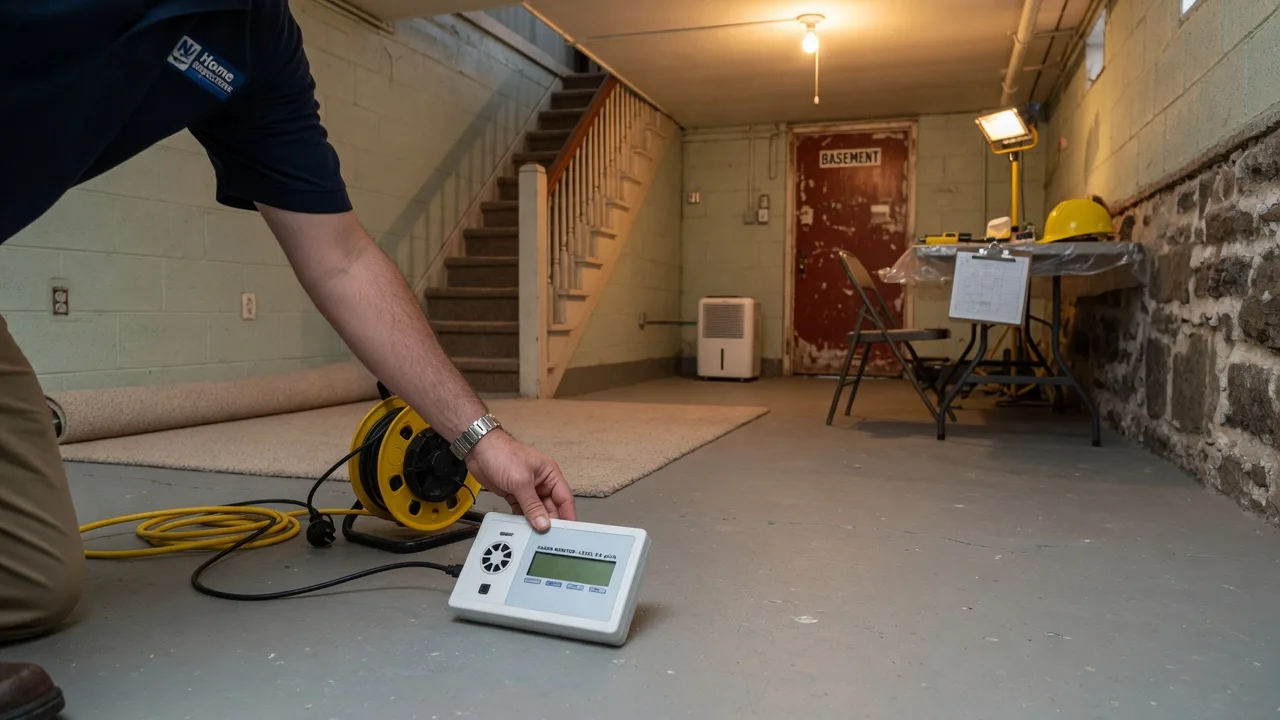
A radon test measures the level of radon gas in a home. Radon is a naturally occurring radioactive gas that can seep into buildings through the soil, and it is the second leading cause of lung cancer in the United States after smoking. New Jersey has some of the highest radon levels in the country, making testing a critical step for every homeowner and homebuyer in Burlington County and South Jersey.
I have helped over 728 families buy and sell homes across Burlington County and South Jersey, and I have seen radon levels range from perfectly safe to well above the EPA action level in homes just blocks apart. This guide covers everything you need to know about radon testing, New Jersey radon requirements, and what to do if your home has elevated levels.
4.0 pCi/L
EPA Action Level
21,000
Lung Cancer Deaths Per Year from Radon
$100-200
Average Cost of a Radon Test
$800-1,500
Average Cost of Mitigation
What Is Radon?
Radon is an invisible, odorless, tasteless radioactive gas that forms naturally from the breakdown of uranium in soil, rock, and water. It is present in nearly all soil and can move through the ground and into the air we breathe. Outside, radon dilutes to harmless levels. Inside a home, however, it can accumulate to dangerous concentrations.
Radon is measured in picocuries per liter (pCi/L) of air. The average outdoor radon level is about 0.4 pCi/L. The average indoor level in the United States is about 1.3 pCi/L. The EPA recommends taking action to reduce radon levels when the concentration reaches 4.0 pCi/L or higher.
In New Jersey, the average indoor radon level is significantly higher than the national average. According to the New Jersey Department of Environmental Protection, about 17% of homes tested in New Jersey have radon levels at or above the EPA action level of 4.0 pCi/L. In some counties, the percentage is much higher.
Why Is Radon Dangerous?
Radon is dangerous because it is radioactive. When you breathe radon gas into your lungs, the radioactive particles decay and release small bursts of energy that can damage the DNA in your lung cells. Over time, this damage can lead to lung cancer.
The health risks are well documented. The U.S. Surgeon General, the EPA, the World Health Organization, and the American Lung Association all agree that radon is a significant health threat. The EPA estimates that radon causes about 21,000 lung cancer deaths per year in the United States. To put that in perspective, radon kills more people each year than drunk driving, falls in the home, and house fires combined.
The risk is especially high for smokers. A smoker exposed to high radon levels has a dramatically higher risk of developing lung cancer than a smoker in a low-radon home. But nonsmokers are not immune. Radon is the leading cause of lung cancer in nonsmokers and accounts for about 2,900 lung cancer deaths per year among people who have never smoked.
The scary part is that you cannot see, smell, or taste radon. The only way to know if you are being exposed is to test. That is why every home should be tested, especially in New Jersey where radon levels are elevated across much of the state.
How Does Radon Get Into Your Home?
Radon enters homes through the soil surrounding the foundation. The gas moves from the soil into the home through any opening it can find. Here are the most common entry points:
- Cracks in concrete slabs and foundations: Even hairline cracks can allow radon to seep in from the soil below.
- Gaps around pipes and utility lines: Spaces where pipes, wires, or conduits pass through the foundation or slab are common entry points.
- Floor drains and sump pumps: Unsealed drains and sump pits provide direct pathways for soil gas to enter the home.
- Construction joints: The joints where concrete walls meet the floor slab are frequent entry points for radon.
- Exposed soil in crawl spaces: Crawl spaces with dirt floors allow radon to enter directly.
- Well water: In some areas, radon can dissolve into groundwater and enter the home through the water supply, though this is less common than soil entry.
Once radon enters the home, it becomes trapped inside. As the home's air pressure drops (from exhaust fans, dryers, and heating systems), more radon is pulled in from the soil. This is why radon levels are often highest in basements and lower levels of the home, and why levels can change throughout the day and year.
Radon Levels in New Jersey
New Jersey has some of the highest radon levels in the country. The EPA has classified most of New Jersey as Zone 1 (highest potential) or Zone 2 (moderate potential) for radon. This means the geology of the state puts homes at elevated risk.
Here is how New Jersey counties break down by EPA radon zone:
- EPA Zone 1 (highest potential): Hunterdon, Mercer, Somerset, Morris, Sussex, Warren, Passaic, Bergen, Essex, Union, and parts of Middlesex and Monmouth counties. These areas have predicted average indoor radon levels above 4.0 pCi/L.
- EPA Zone 2 (moderate potential): Burlington, Camden, Gloucester, Salem, Cumberland, Cape May, Atlantic, Ocean, and parts of Middlesex and Monmouth counties. These areas have predicted average indoor radon levels between 2.0 and 4.0 pCi/L.
- EPA Zone 3 (low potential): Only a small portion of the state falls into this category, and even Zone 3 homes can still have elevated radon levels.
Important: Zone designations are predictions based on geology. Any home, in any zone, can have elevated radon levels. The only way to know is to test. I have personally seen Burlington County homes with radon levels well above 4.0 pCi/L, even though the county is classified as Zone 2.
When Should You Test for Radon?
There are several situations when radon testing is essential:
- When buying a home: A radon test should be part of your home inspection process. Most purchase contracts in New Jersey include a radon testing contingency, allowing you to test and negotiate if levels are high.
- Every two years after moving in: Radon levels can change over time as the soil shifts, the foundation settles, and the home's ventilation changes. The EPA recommends testing every two years.
- After renovations: Major renovations, especially those that affect the foundation, basement, or lower levels, can change radon entry points and levels. Test after any significant construction.
- Before buying or selling: If you are selling your home, testing gives you information that can help you negotiate. If you are buying, testing protects your health and your investment.
- If you live in a high-risk area: Burlington County, Camden County, and Gloucester County all have moderate to high radon potential. If you live in these areas, testing is strongly recommended.
- If you spend time in the basement: If you use your basement as a living space, home office, or bedroom, testing is especially important since radon levels are typically highest in the lowest level of the home.
For more on when to test and what the results mean, see my detailed answer to "What is a radon test and should I get one?".
How Radon Testing Works
Radon testing is simple, inexpensive, and non-invasive. There are two main types of tests:
Short-Term Radon Tests
Short-term tests are the most common type used during real estate transactions. They take 2 to 7 days to complete and provide a snapshot of the radon level in the home. Short-term tests include:
- Charcoal canisters: The most common and affordable option. You place the canister in the lowest livable level of the home, leave it for the specified time, and mail it to a lab for analysis.
- Continuous radon monitors (CRMs): Electronic devices that measure radon levels continuously and provide hourly readings. These are often used by professional radon testers and provide more detailed data.
- Alpha track detectors: A small plastic device that records alpha particles released by radon decay. These are also used for short-term testing but are more commonly used for long-term tests.
Long-Term Radon Tests
Long-term tests take 90 days to one year and provide a more accurate average reading of radon levels throughout the year. Because radon levels fluctuate with weather, seasons, and home use, a long-term test gives a better picture of your actual exposure. Long-term tests are typically alpha track detectors or electret ion chambers.
Where to Place the Test
For accurate results, the radon test must be placed correctly:
- Place the test in the lowest livable level of the home (typically the basement or first floor).
- Place it in a room that is used regularly, not a storage area or utility room.
- Keep the test at least 20 inches above the floor and at least 3 feet away from doors and windows.
- Do not place the test in the kitchen, bathroom, laundry room, or near a fireplace or stove.
- Keep windows and doors closed for at least 12 hours before and during the test period.
- Do not disturb the test or move it during the testing period.
What Happens If Levels Are High?
If your radon test comes back at 4.0 pCi/L or higher, the EPA recommends taking action to reduce the level. Here is what you should do:
- Do not panic. High radon levels are common in New Jersey, and the fix is straightforward and affordable.
- Confirm with a second test. If your initial test was a short-term test, consider doing a follow-up short-term test or a long-term test to confirm the results. Radon levels can fluctuate, so a second test provides confidence in the reading.
- Contact a certified radon mitigation professional. The New Jersey Department of Environmental Protection maintains a list of certified radon mitigation contractors. Only use a certified professional.
- Get a quote for a mitigation system. Most radon mitigation systems cost between $800 and $1,500 to install, depending on the size and design of your home.
- Install the system. A typical mitigation system can reduce radon levels by up to 99% and is usually installed in one day.
- Test again after mitigation. After the system is installed, test again to confirm the levels have dropped below 4.0 pCi/L.
In a real estate transaction, elevated radon levels are a common negotiation point. Most sellers are willing to address radon issues because the health concern is real and the fix is relatively affordable. I have helped many buyers and sellers navigate radon negotiations, and in most cases, we reach a fair resolution.
Radon Mitigation Systems
A radon mitigation system is a straightforward and effective solution. The most common type is a sub-slab depressurization system, also known as an active soil depressurization (ASD) system. Here is how it works:
- A suction point is created in the concrete slab or crawl space floor. A contractor drills a hole through the foundation floor to access the soil below.
- A PVC pipe is installed from the suction point through the home to the roofline. The pipe runs from the basement or crawl space, through the interior or exterior of the home, and out through the roof.
- A radon fan is installed in the pipe, typically in the attic or outside the home. The fan creates negative pressure under the slab, pulling radon gas from the soil and venting it safely above the roofline.
- The pipe exhausts the radon gas above the roofline, where it dilutes to harmless levels in the outdoor air.
- A manometer (pressure gauge) is installed to show that the system is working properly. If the gauge shows a pressure difference, the system is operating correctly.
Cost of mitigation: Expect to pay $800 to $1,500 for a typical residential radon mitigation system. More complex installations, such as homes with crawl spaces, multiple slabs, or difficult access, can cost more. The ongoing operating cost is minimal, typically $75 to $150 per year for electricity.
Maintenance: Radon mitigation systems require very little maintenance. Check the manometer monthly to ensure the system is running. The fan should last 5 to 10 years and can be replaced for $200 to $400. Test your home every two years to confirm the system is still working effectively.
New Jersey Radon Laws
New Jersey has specific laws and regulations regarding radon testing and disclosure. Here is what you need to know:
Seller Disclosure Requirements
New Jersey law requires sellers to disclose any known radon test results and radon mitigation systems on the property. The New Jersey Seller's Property Condition Disclosure Statement includes a specific question about radon. Sellers must disclose:
- Whether they have tested for radon and the results of those tests
- Whether a radon mitigation system is installed on the property
- Any known radon-related issues
Sellers are not required to test for radon before selling, but they must disclose any information they have. If a buyer requests a radon test as part of the inspection process, the seller typically allows access for the testing.
Testing Requirements for Sellers
New Jersey does not require sellers to test for radon before listing their home. However, in practice, many buyers include a radon testing contingency in their offer. If the test reveals elevated levels, the buyer and seller negotiate who pays for mitigation.
Some home inspectors in New Jersey are also certified radon testers. If you are buying a home, I recommend including radon testing as part of your inspection contingency. The cost is small compared to the peace of mind it provides.
New Jersey Radon Certification
New Jersey requires radon testing and mitigation professionals to be certified by the New Jersey Department of Environmental Protection (NJDEP). Always use a certified professional for radon testing and mitigation. You can verify a contractor's certification through the NJDEP Radon Program.
South Jersey Context: Radon Levels in Burlington, Camden, and Gloucester Counties
South Jersey has a mix of radon risk levels, but the entire region is affected. Here is what you need to know about the three counties I serve most frequently:
Burlington County
Burlington County is classified as EPA Zone 2, meaning it has moderate potential for elevated radon levels. However, I have seen significant variation across the county. Homes in northern and western Burlington County, including areas like Mount Laurel, Moorestown, Medford, and Marlton, tend to have higher radon levels than homes in the southern and eastern parts of the county. The geology of the Pinelands region in southern Burlington County generally produces lower radon levels, but exceptions exist.
In my experience, it is not uncommon to see radon levels of 4.0 to 8.0 pCi/L in Burlington County homes, especially those with basements. Mitigation systems are very common in this area.
Camden County
Camden County is also classified as EPA Zone 2. Radon levels vary across the county, with higher levels typically found in the northern and western parts. Homes in Cherry Hill, Haddonfield, Voorhees, and Collingswood should absolutely be tested. Camden County has a higher percentage of homes with basements, which increases the likelihood of elevated radon levels.
Gloucester County
Gloucester County is classified as EPA Zone 2 as well. The county's geology produces moderate radon potential. Homes in areas like Glassboro, Pitman, Washington Township, and Mullica Hill should be tested. The southern part of the county near the Delaware Bay tends to have lower radon levels, but testing is still recommended.
The key takeaway for South Jersey homeowners: regardless of the county, you should test your home. Zone designations are predictions, not guarantees. I have seen homes in low-risk areas with high radon levels and homes in high-risk areas with low levels. The only way to know is to test.
For more on the home buying process and what to expect during your inspection period, read my complete buyer's guide.
DIY vs Professional Radon Testing
Both DIY and professional radon testing have their place. Here is how they compare:
DIY Radon Testing
DIY radon test kits are available at hardware stores, home improvement centers, and online. They typically cost $10 to $30 and include the test device, instructions, and lab analysis. The process is simple: place the test, leave it for the specified time, seal it, and mail it to the lab. Results come back in a few days to a few weeks.
Pros:
- Low cost, typically $10 to $30
- Easy to use and widely available
- Good for routine testing every two years
- Can be used for long-term testing
Cons:
- Requires careful placement and following instructions exactly
- Results can be affected by test placement errors or tampering
- Not typically accepted in real estate transactions without a professional test
- No professional oversight or quality control
Professional Radon Testing
Professional radon testing is performed by a certified radon tester who uses a continuous radon monitor (CRM) or other approved device. The test typically costs $100 to $200 and includes professional placement, monitoring, and a detailed report.
Pros:
- More accurate and reliable results
- Certified professional follows proper protocols
- Continuous monitors provide hourly data and detect tampering
- Results are accepted in real estate transactions
- Professional can answer questions and provide guidance
Cons:
- Higher cost, typically $100 to $200
- Requires scheduling an appointment
My recommendation: For routine testing every two years, a DIY test kit is fine. For a real estate transaction, use a professional tester. The cost is modest, and having a certified professional's report carries weight in negotiations. Many home inspectors in South Jersey also offer radon testing as an add-on service, which is convenient and cost-effective.
Frequently Asked Questions About Radon Testing
How often should I test for radon?
The EPA recommends testing every two years. You should also test after any renovation or after making changes to your home's foundation, basement, or ventilation system. If you are buying or selling a home, test as part of the home inspection process.
Can I test for radon myself?
Yes, DIY radon test kits are available at hardware stores and online for $10 to $30. They are easy to use and provide accurate results when placed correctly. For real estate transactions, a professional test is recommended because the results carry more weight in negotiations.
How long does a radon test take?
Short-term tests take 2 to 7 days. Long-term tests take 90 days to one year. For real estate transactions, a short-term test of 48 to 48 hours is standard. The test must be placed in the lowest livable level of the home with windows and doors kept closed for at least 12 hours before and during the test.
What is a safe radon level?
There is no truly safe level of radon, but the EPA recommends taking action when levels are at or above 4.0 pCi/L. The average indoor radon level in the United States is about 1.3 pCi/L. The EPA also recommends considering mitigation for levels between 2.0 and 4.0 pCi/L, especially if you spend significant time in the lowest level of the home.
Does New Jersey require radon testing for home sales?
New Jersey does not require sellers to test for radon before selling. However, sellers must disclose any known radon test results and mitigation systems. Buyers typically include a radon testing contingency in their offer, and testing is strongly recommended as part of the home inspection process.
How much does radon mitigation cost in New Jersey?
A typical radon mitigation system in New Jersey costs $800 to $1,500. More complex installations can cost more. The system is usually installed in one day and can reduce radon levels by up to 99%. Operating costs are minimal, about $75 to $150 per year for electricity.
Should I test for radon if I have a mitigation system?
Yes. Test your home every two years to confirm the mitigation system is still working effectively. Also test after any major renovation or if you notice the system's manometer shows no pressure difference. Mitigation fans can fail over time, and regular testing ensures your home stays safe.
Final Verdict: Get Tested, Stay Safe
Radon is a real health risk in New Jersey, but it is also a problem with a straightforward solution. Testing is simple, inexpensive, and gives you the information you need to protect your family. If levels are high, mitigation is affordable and effective.
Here is my bottom line for South Jersey homeowners and homebuyers:
- If you are buying a home: Include a radon test in your inspection contingency. The cost is a fraction of a percent of the purchase price, and the information is invaluable.
- If you are selling a home: Consider testing before listing. Knowing your radon level gives you time to address any issues on your terms, rather than negotiating under pressure during the inspection period.
- If you own a home: Test every two years. Radon levels can change, and regular testing ensures your home stays safe.
- If your test shows high levels: Do not panic. Hire a certified radon mitigation professional, install a system, and test again. The problem is fixable.
For more information on the home inspection process and what to expect when buying a home in South Jersey, read my complete home inspection guide.
Have questions about radon testing? Contact Bob Millaway at 856.426.1522

Bob Millaway
Epique Realty Agent and AI Certified Agent with 20+ years of experience and 728+ homes sold across Burlington County and South Jersey. Bob combines local expertise, honest guidance, and cutting-edge technology to help buyers and sellers make confident real estate decisions.
About Bob