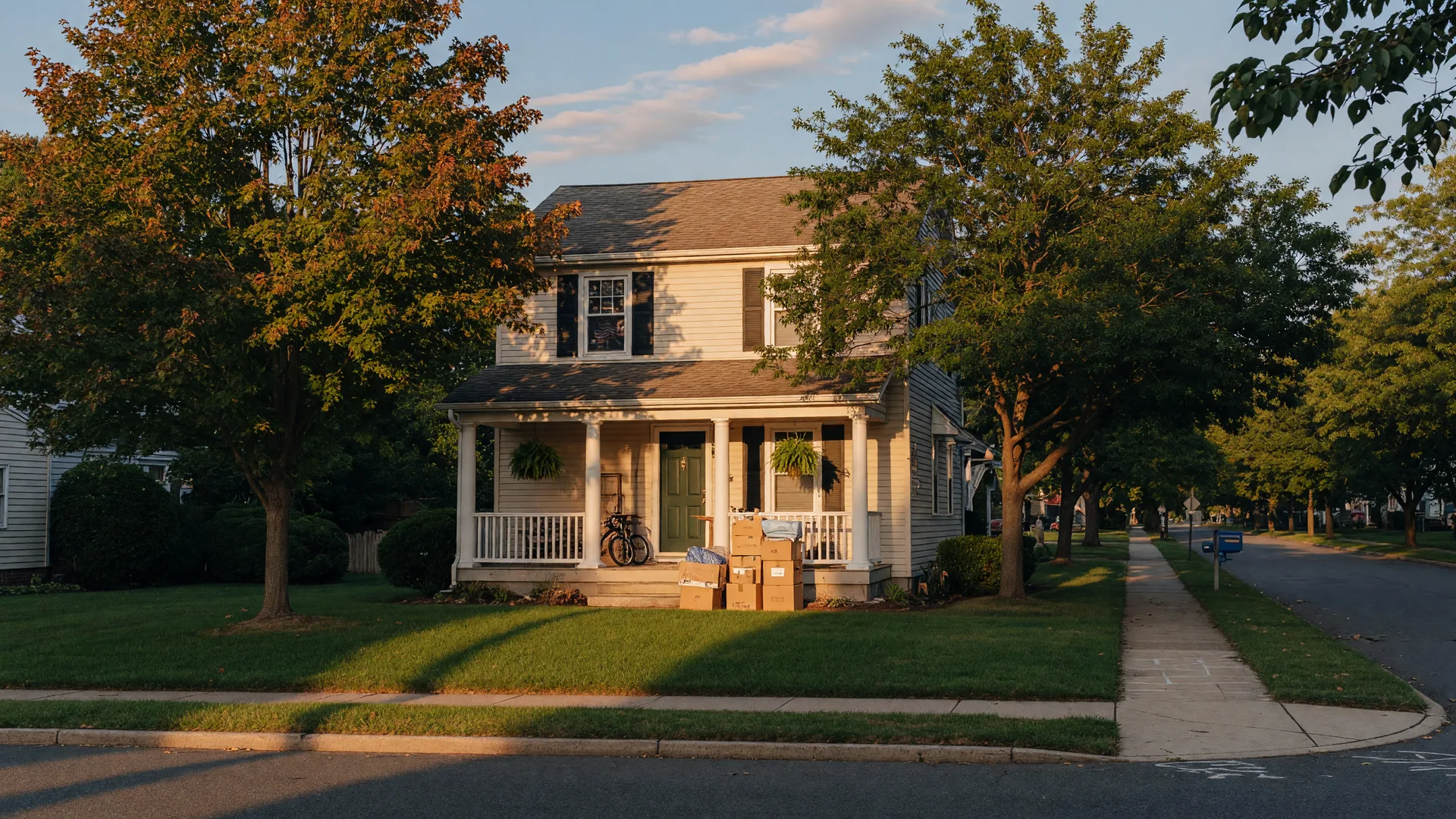
The short answer: renting out your home makes sense when the numbers work with honest assumptions, you still protect your ability to sell tax-free later, and you genuinely want to be a landlord. Selling makes more sense when you need your equity, you do not want the responsibility, or the math favors cashing out. This guide walks through the capital gains clock, what a Burlington County rental actually costs to carry, and the New Jersey landlord rules you need to know before you decide.
This is one of the most common questions I hear from move-up buyers, downsizers, and families relocating out of the area. The house is paid down and the neighborhood is familiar, so keeping it as a rental sounds appealing. It can be a great strategy, and it can also quietly cost you tens of thousands in taxes and stress. The difference comes down to three things: the numbers, the tax clock, and how much landlord you want to be.
What Is the Capital Gains Clock, and Why Does It Matter?
Under IRS rules (Section 121 of the tax code), you can exclude up to $250,000 of gain when you sell your main home if you are single, or up to $500,000 if you are married filing jointly. To qualify, you must have owned the home and lived in it as your principal residence for at least two of the five years before the sale. The two years do not have to be consecutive, and you generally can claim the exclusion only once every two years. The IRS explains it in Topic 701 and Publication 523.
Here is the catch that surprises most homeowners: the clock runs on the five years before the sale. If you move out, rent the home for several years, and then sell, you may no longer qualify for the full exclusion, because you no longer lived there for two of the five years before selling. You can restart the clock by moving back in for two years, and a partial exclusion may apply for a job change, health reasons, or an unforeseen circumstance. As a general rule, renting for a long stretch can turn tax-free gain into taxable gain.
In practical terms: if you are close to the two-year mark and might sell soon, renting can cost you the exclusion. If you have lived there well beyond two years, you have more runway. This one rule should shape your timeline before any spreadsheet does.
Can You Actually Cash Flow as a Landlord in Burlington County?
The most recent verified county data (June 2026) put Burlington County's median sale price near $430,000, up about 2.4 percent from a year earlier, with the average home value around $428,600. That is what you would be cashing out, and what your property would be valued against as a rental asset.
On the rent side, I want to be straight with you: there is no official county-wide figure for single-family rents. Rental-listing data points in different directions, with three-bedroom asking rents roughly between $2,260 and $2,950 a month depending on the source, and listed houses spanning about $1,800 to $3,700 a month by town. A realistic planning number for a typical three-bedroom house is the mid-$2,000s to low-$3,000s, but your town, condition, and finishes move it a lot. My South Jersey rental market guide walks through how to read these figures.
Now the carrying costs. A mortgage at today's rates, property taxes, insurance, maintenance, vacancy, and management add up fast. Burlington County property taxes are among the highest in the nation, and my property tax guide shows how much they vary by town. Budget 1 to 2 percent of the home's value per year for maintenance, plus a vacancy allowance, plus 8 to 10 percent of rent if you hire a property manager.
The honest headline: at current mortgage rates, many Burlington County homes rent for less than their true carrying cost, meaning you may subsidize the rental each month in exchange for appreciation and equity paydown. That can be a legitimate long-term strategy, and my cap rate guide shows how to run the math properly. Know the difference between gross rent and actual cash flow, because that gap is where landlords lose money.
What Does Being a New Jersey Landlord Really Involve?
New Jersey is one of the most tenant-protective states in the country, and the rules apply to single-family rentals too. Under the Rent Security Deposit Act, you cannot collect more than one and a half times one month's rent as a security deposit. It must be held in a separate interest-bearing account, you must tell the tenant in writing where it is held within 30 days, and you must return it within 30 days after move-out, minus itemized deductions. After the first year, you can raise it only by up to 10 percent per year.
There is no statewide rental license, but landlords renting a single dwelling unit must file a Landlord Identity Registration with the state, and many towns add their own registration and inspection requirements. Ask your town clerk what applies. You also owe tenants the Truth in Renting booklet and a lead paint disclosure for pre-1978 homes. The state's landlord-tenant page is the right place to start.
Then there is the day-to-day reality: screening tenants, maintenance calls at 9 p.m., chasing rent, and the eviction process if things go wrong. If you are renting from a distance, add a property manager to the budget. My tenant screening guide and my guide to buying rental property cover what good landlords do before they hand over keys. Being a landlord is a part-time job, and it is worth deciding whether you want it.
When Does Renting Out Your Home Actually Make Sense?
Renting is the stronger play when several things are true:
- The numbers cash flow with honest assumptions. You cover the mortgage, taxes, insurance, maintenance, vacancy, and management, with something left over.
- You still protect the capital gains exclusion. You can sell within the two-of-five-year window, or you are comfortable paying capital gains later.
- You may return to the area. Keeping the home gives you a place to come back to.
- You want the long-term asset and believe in the area's appreciation.
- You are ready to be a landlord, or you have budgeted for management.
If you are considering a move to another town in the region, spend real time there first. The living guides for towns like Moorestown, Cherry Hill, and Delran are a good place to start comparing daily life.
When Does Selling Make More Sense?
Selling is usually the right call when any of these describe you:
- You need the equity. If your next home depends on the money in this one, renting may not even be feasible. My home equity guide helps you see what you are working with.
- You do not want the job. If the thought of a tenant call at midnight makes your stomach drop, that is data.
- The capital gains clock is a concern. If you are near the two-year mark and may sell soon, cashing out now can save you a lot in taxes.
- The home needs major work. Deferred maintenance becomes your problem, and you fund it out of rent that may not cover it.
- You want to move on. There is real value in a clean break, especially after a divorce, an inheritance, or a hard chapter.
The market picture matters too. Burlington County inventory has been running roughly a fifth higher than a year ago, so buyers have more choices and pricing accuracy matters more. My analysis of whether now is a good time to sell and my weekly market snapshot show what the current numbers mean for your town. If you do sell, pricing it right from day one is the biggest lever, and my pricing guide explains the strategy.
What If You Need the Equity for Your Next Home?
This question settles most of these conversations. Keeping the home as a rental means leaving your equity in it. If your next purchase depends on that equity for a down payment, renting out the current home usually is not an option unless you can finance the move another way. My move-up buyers guide walks through buy-before-sell strategies, bridge options, and timing two transactions, including when keeping the old house as a rental fits.
How Do I Decide? A Simple Three-Question Framework
When a client asks me this, I take them through three questions. If you can answer yes to all three, renting is defensible. If you hesitate on any of them, selling deserves a hard look.
- Do the numbers work with honest assumptions? Run the full carrying cost: mortgage, taxes, insurance, maintenance at 1 to 2 percent of value, vacancy, and management. Compare it to realistic rent for your town, not the best-case listing.
- Do you still protect the capital gains exclusion? Map your timeline against the two-of-five-year rule and decide what you are willing to pay in taxes if you miss the window.
- Do you actually want to be a landlord? Not the idea of passive income, the reality of the job. If you would rather pay a manager, budget for it.
Frequently Asked Questions
Can I rent out my home and still avoid capital gains tax when I sell?
Only if you still meet the two-of-five-year rule: you must have owned and lived in the home as your principal residence for two of the five years before the sale. Renting for a long stretch can break the use test, though a partial exclusion may apply for job changes, health reasons, or unforeseen circumstances.
How much rent can I charge for a house in Burlington County?
There is no official county-wide figure. Rental-listing data puts three-bedroom asking rents roughly between $2,260 and $2,950 a month depending on the source, with houses spanning about $1,800 to $3,700 a month by town. A realistic planning number for a typical three-bedroom house is the mid-$2,000s to low-$3,000s.
Do I need a license to rent out my home in New Jersey?
There is no statewide rental license, but landlords renting a single dwelling unit must file a Landlord Identity Registration with the state, and many towns add their own registration and inspection requirements. Check with your town clerk.
What happens to my homeowners insurance if I rent out my home?
A standard homeowners policy generally does not cover rental use. You typically need a landlord or dwelling fire policy that covers the structure plus liability for a tenant-occupied home. Talk to your insurance agent before anyone moves in.
Should I use a property manager?
Property managers typically charge a percentage of the monthly rent, often in the 8 to 10 percent range, plus leasing fees. For out-of-state landlords or anyone who does not want the day-to-day job, that cost is usually worth it.
Let's Talk It Through
There is no one-size-fits-all answer, and you should not have to guess. I have helped families on both sides of this decision, and my job is to give you clear numbers and honest advice, not to push you into a sale. Call me at 856.426.1522 or schedule a no-pressure conversation, and we will look at your equity, timeline, and goals together.

Bob Millaway
Epique Realty Agent · AI Certified Agent™ · NJ Lic. #791082 · 856.426.1522. With over 728 homes sold and $115M+ in career sales, Bob has helped families across Burlington County weigh decisions just like this one. Local knowledge, honest guidance, and confident decisions, without the pressure.
Selling Services