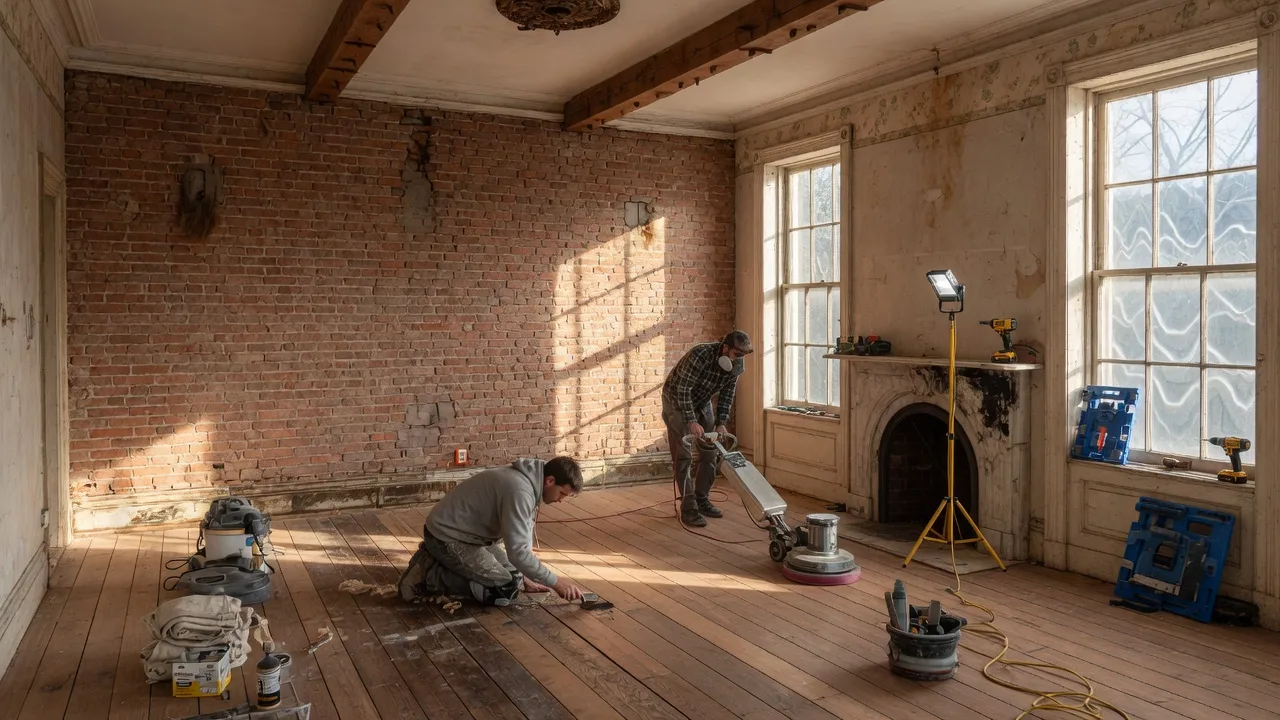
Renovating a historic home is a delicate balancing act. You want modern comfort, energy efficiency, and functionality. But you also want to preserve the character, craftsmanship, and details that made you fall in love with the house in the first place. This guide is designed to help you navigate that balance, whether you are planning a kitchen update, a full restoration, or something in between.
Over 20 years in real estate, I have watched many homeowners take on historic renovations. The ones who succeed share a common approach: they plan carefully, work with the right professionals, and understand that historic renovation is a different process from renovating a modern home. Here is how to do it right in South Jersey.
How Do You Renovate a Historic Home Without Losing Its Character?
The single most important principle of historic renovation is understanding what makes your home special before you change anything. Take time to study the original architecture, materials, and design intent. The goal is not to freeze the house in time, but to make thoughtful changes that respect the original while meeting modern needs.
Here are the key principles to follow:
- Repair before you replace: Original materials are often higher quality than modern substitutes. Old-growth wood, plaster walls, and solid-core doors can be repaired and restored. Only replace when the material is beyond repair.
- Match the original: When replacement is necessary, match the original material, profile, and style. Modern windows can be made to look historically accurate. New kitchen cabinets can echo the proportions of the originals.
- Respect the floor plan: Victorian and Colonial floor plans were designed for a reason. Removing walls without understanding the structural and visual impact can destroy the home's character. Work with the existing arrangement where possible.
- Use reversible changes: Where possible, make changes that can be undone in the future. This is especially important for additions, exterior modifications, and major system upgrades.
- Don't over-improve: A historic home should feel like a historic home. Overly modern finishes can clash with the original architecture. Find a balance that feels authentic.
What Are the Most Common Historic Home Renovations?
Kitchen Renovation
The kitchen is the most common renovation in any home, and historic homes are no exception. The challenge is fitting modern appliances and functionality into a space that was designed for a different era. Options include:
- Preserving the original layout: Many historic kitchens work well with their original footprint. Butlers pantries can become coffee bars, and original cabinetry can be refinished rather than replaced.
- Choosing period-appropriate finishes: Butcher block countertops, farmhouse sinks, and classic subway tile work beautifully in historic homes.
- Concealing modern appliances: Panel-ready refrigerators and dishwashers can be hidden behind cabinetry that matches the original style.
- Adding a kitchen in a new location: If the original kitchen is too small, consider building an addition or converting a rear porch into a kitchen. This allows you to preserve the original kitchen as a butler's pantry or prep kitchen.
Bathroom Renovation
Historic homes often have fewer bathrooms than modern families expect, and the bathrooms they do have are typically small. Common strategies include:
- Converting a spare bedroom or closet: Adding a bathroom in an underused space is often the best solution.
- Choosing period-appropriate fixtures: Claw-foot tubs, pedestal sinks, and subway tile are classic choices that work in any historic home.
- Restoring original tile: Many historic homes have original hex tile or ceramic tile that can be restored rather than replaced.
Electrical and Plumbing Upgrades
These are the most important upgrades for safety and functionality, and they are also the most invasive. The key is to plan the work carefully to minimize damage to historic fabric:
- Rewiring: Modern wiring can be run through existing walls with minimal damage if the contractor is careful. A full rewire typically costs $8,000-$20,000.
- Repiping: Replacing old galvanized pipes with copper or PEX costs $5,000-$15,000. This is a good opportunity to add modern fixtures and shut-off valves.
- HVAC: Ductwork for central air is the biggest challenge in historic homes. High-velocity mini-duct systems and ductless mini-splits are good options that minimize wall damage.
Window Restoration
Original windows are one of the most important character-defining features of a historic home. Restoring them is almost always better than replacing them:
- Repair sash cords and weights: This is a simple fix that restores operability.
- Add weatherstripping: Modern weatherstripping can dramatically improve energy efficiency without changing the window's appearance.
- Install storm windows: Interior or exterior storm windows can reduce heat loss by 30-50% and protect the original windows from the elements.
What Are the New Jersey Historic Preservation Guidelines?
If your home is in a local historic district, exterior changes visible from the street require review by the local historic preservation commission. The guidelines are based on the Secretary of the Interior's Standards for Rehabilitation, which are the national standard for historic preservation.
The key standards relevant to homeowners include:
- A property shall be used for its historic purpose or be given a new use that requires minimal change to the defining characteristics of the building and its site.
- The historic character of a property shall be retained and preserved. The removal of historic materials or alteration of features and spaces that characterize a property shall be avoided.
- Each property shall be recognized as a physical record of its time, place, and use. Changes that create a false sense of historical development, such as adding conjectural features or architectural elements from other buildings, shall not be undertaken.
- Changes to a property that have acquired historic significance in their own right shall be retained and preserved.
- Distinctive features, finishes, and construction techniques or examples of craftsmanship that characterize a property shall be preserved.
- Deteriorated historic features shall be repaired rather than replaced. Where the severity of deterioration requires replacement of a distinctive feature, the new feature shall match the old in design, color, texture, and other visual qualities and, where possible, materials.
- New additions, exterior alterations, or related new construction shall not destroy historic materials that characterize the property. The new work shall be differentiated from the old and shall be compatible with the massing, size, scale, and architectural features to protect the historic integrity of the property.
The New Jersey Historic Preservation Office provides detailed guidance and resources for homeowners. Many local historic preservation commissions also publish design guidelines specific to their district.
How Do You Find the Right Contractors for a Historic Renovation?
Finding contractors who understand historic homes is the single most important step in a successful renovation. Here is how to find them:
- Ask the local historic preservation commission: They maintain lists of contractors who have successfully completed work in the district.
- Contact preservation organizations: Preservation New Jersey and local historical societies can provide referrals.
- Look for certified tradespeople: The National Association of Home Builders offers a Certified Graduate Remodeler designation. Look for contractors with experience in historic work.
- Check references: Ask for references from other historic homeowners and visit completed projects if possible.
- Interview multiple contractors: Ask about their approach to historic preservation, their experience with specific materials (plaster, slate, leaded glass), and their understanding of the local review process.
Be prepared for the fact that historic renovation often costs more than renovating a modern home. Specialized trades, custom materials, and the unpredictability of old buildings all add to the cost. A good contractor will help you anticipate these costs and plan accordingly.
What Resources Are Available for Historic Homeowners in New Jersey?
Several organizations and programs can help you with your historic renovation:
- New Jersey Historic Preservation Office: The state agency that oversees historic preservation programs, including tax credits and review of state-level projects.
- Preservation New Jersey: A nonprofit organization that advocates for historic preservation and provides resources and education.
- National Trust for Historic Preservation: Offers a wealth of online resources, including preservation how-to guides and a directory of preservation professionals.
- Local historical societies: Most South Jersey towns have historical societies that can provide context about your home's history and architecture.
- Local historic preservation commissions: Your local commission can provide design guidelines and guidance on the review process before you start planning.
Frequently Asked Questions About Historic Home Renovation
Can I add central air conditioning to a historic home?
Yes. High-velocity mini-duct systems and ductless mini-splits are the best options for historic homes, as they minimize wall damage and can be installed with minimal visual impact. Standard forced-air systems with ductwork can also be installed, but they require more invasive work.
Do I need approval from the historic commission for interior renovations?
Generally, no. Interior renovations are not subject to historic district review unless they affect the exterior (such as adding a new window or door). However, some local ordinances may have additional requirements, so check with your local commission.
Can I add an addition to a historic home?
Yes, but additions must be compatible with the historic character of the home and the district. The Secretary of the Interior's Standards require that additions be differentiated from the original structure while being compatible in massing, size, scale, and architectural features.
How much does a historic home renovation cost compared to a modern home?
Historic renovations typically cost 10-30% more than comparable renovations in modern homes. The premium comes from specialized trades, custom materials, and the unpredictability of working with old buildings. However, the results are often more distinctive and valuable.
Are there tax credits for historic home renovations in New Jersey?
Yes. The New Jersey Historic Property Reinvestment Program provides a transferable tax credit for up to 30% of qualified rehabilitation costs for income-producing historic properties. For owner-occupied homes, the federal 20% credit is available for certified historic structures that are used for business purposes. Residential homeowners may benefit from local property tax abatements.
Planning Your Historic Home Renovation
A successful historic renovation starts with a clear vision and realistic expectations. Take the time to understand what you are buying, what you want to achieve, and what it will take to get there. Work with professionals who share your respect for the home's history, and do not be afraid to ask questions about every decision.
I have helped many buyers find historic homes that were the perfect canvas for their renovation vision. If you are considering a historic home and want to understand what it will take to make it your own, I can help you evaluate the property, connect you with the right professionals, and make a confident decision.

Bob Millaway
Epique Realty Agent and AI Certified Agent with 20+ years of experience and 728+ homes sold across Burlington County and South Jersey. Bob has helped many buyers evaluate historic properties and connect with trusted renovation professionals throughout the region.
About Bob