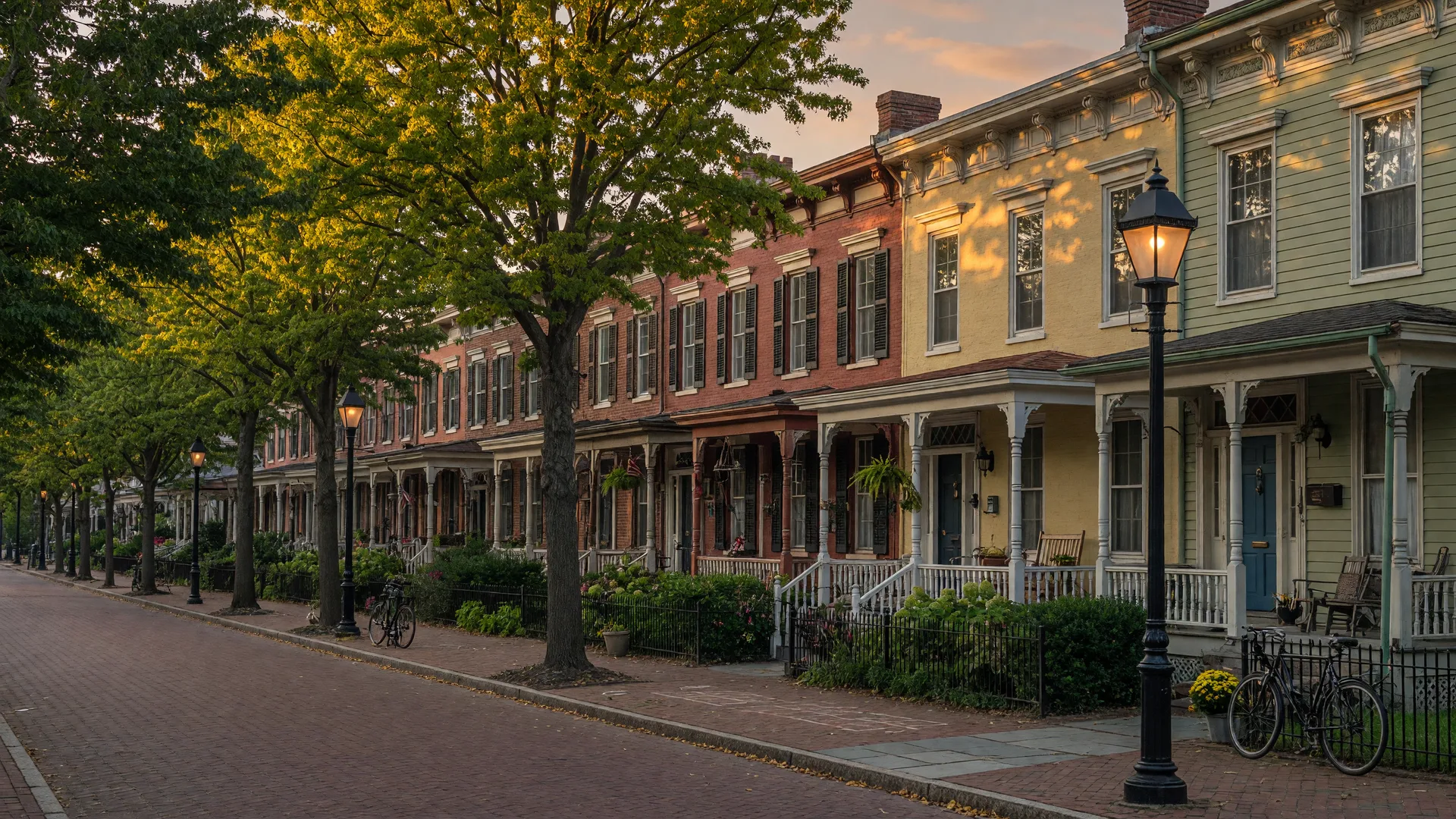
Historic districts are some of the most desirable places to live in South Jersey. They offer tree-lined streets, architectural beauty, and a strong sense of community that is hard to find in newer developments. But living in a historic district also comes with a unique set of rules, responsibilities, and rewards. Here is what you need to know before buying a home in one of Burlington or Camden County's historic districts.
I have helped over 728 families buy and sell homes across South Jersey, including many in historic districts. The most common question I hear from buyers is, "How much freedom will I really have with my home?" The answer depends on which district you choose and what you want to do. Let me walk you through the details.
What Is a Historic District?
A historic district is a designated area where the buildings, structures, and landscape contribute to the area's historic character. There are two main types of historic district designations:
- National Register Historic Districts: These are honorary designations that recognize the historic significance of an area. They do not impose restrictions on property owners. The National Register is administered by the National Park Service and focuses on preservation through recognition.
- Local Historic Districts: These are created by municipal ordinance and carry legal weight. A local historic preservation commission reviews proposed exterior changes to ensure they are consistent with the district's character. This is where the "HOA-like" restrictions come into play.
Many of South Jersey's historic districts have both designations. The National Register listing provides prestige and potential tax benefits, while the local ordinance provides the regulatory framework that preserves the district's character.
What Are the Benefits of Living in a Historic District?
- Preserved character: Your neighbors cannot make changes that would harm the historic fabric of the neighborhood. This protects property values and ensures the area maintains its charm.
- Potential tax incentives: New Jersey offers a 30% tax credit for qualified rehabilitation of certified historic structures. Some municipalities also offer property tax abatements for historic renovations.
- Higher property values: Historic districts in desirable locations often command premium prices. The restrictions that protect the district also protect your investment.
- Community pride: Historic districts tend to attract residents who are invested in their neighborhood and its preservation, creating a strong sense of community.
- Access to resources: Many historic districts have active preservation organizations that provide guidance, grants, and educational resources.
What Are the Restrictions?
The scope of restrictions varies by municipality, but local historic districts typically require review and approval for:
- Exterior alterations: Changes to the facade, roof, windows, doors, and porches visible from the street.
- New construction: Additions, accessory structures, and new buildings must be compatible with the district's character.
- Demolition: Demolition of historic structures is generally prohibited or strictly limited.
- Site features: Fences, walls, walks, driveways, and landscaping may be subject to review.
- Paint colors: Some districts review exterior paint colors, though many do not.
Interior renovations are generally not subject to historic district review, unless the work affects the exterior (such as installing a new window or door). The restrictions focus on maintaining the outward appearance and historic character of the district.
The review process typically involves submitting an application to the local historic preservation commission, which meets monthly. The commission evaluates whether the proposed changes are consistent with the district's design guidelines. Approval is usually granted within 30-60 days for routine projects.
South Jersey's Most Notable Historic Districts
Riverton Historic District
Riverton is one of South Jersey's best-preserved historic districts. The entire town is listed on the National Register of Historic Places, with over 600 contributing structures. The architectural highlight is the collection of Victorian and Queen Anne homes, many with wraparound porches, fish-scale shingles, and intricate millwork. Riverton was founded as a summer resort community in the 1850s, and the original town plan was designed around a central park, a feature that remains today.
Riverton has a local historic preservation ordinance, so exterior changes are reviewed by the Riverton Historic Preservation Commission. The guidelines are well-established, and the commission has a reputation for being reasonable and helpful to property owners who want to maintain their homes appropriately.
Haddonfield Historic District
Haddonfield is one of Camden County's most prestigious addresses, and its historic district is a major reason why. The Haddonfield Historic District encompasses the oldest parts of town, with homes dating from the 18th, 19th, and early 20th centuries. Architectural styles include Colonial, Federal, Greek Revival, Italianate, and Victorian.
Haddonfield's historic district is regulated by a local ordinance and the Haddonfield Historical Preservation Commission. The commission reviews exterior changes that are visible from the street. Haddonfield is also known for its walkable downtown, which is part of the historic district and has its own set of design guidelines. Living in Haddonfield means you are within walking distance of some of the best shopping, dining, and entertainment in South Jersey.
Bordentown Historic District
Bordentown is a historic river town with a walkable downtown and a residential historic district that includes beautiful Federal and Victorian homes. The Bordentown Historic District is listed on the State and National Registers of Historic Places. The town was home to notable figures like Thomas Paine and Clara Barton, and its history is evident in the well-preserved architecture along streets like Farnsworth Avenue and Crosswicks Street.
Bordentown has a Historic Preservation Commission that reviews exterior alterations. The commission's guidelines are designed to protect the historic character of the district while allowing property owners to make reasonable updates.
Burlington City Historic District
Burlington City, founded in 1677, is one of the oldest settlements in New Jersey. Its High Street Historic District is a treasure trove of 18th and 19th century architecture, including Colonial, Federal, and Victorian homes. Burlington City's historic district is listed on the National Register, and the city has a Historic Preservation Commission that reviews exterior changes.
What makes Burlington City unique is the diversity of its historic housing stock. You will find grand Victorian mansions, modest row homes, and everything in between. The city also has a vibrant waterfront and a growing downtown, making it an increasingly popular choice for buyers who want historic character at a more accessible price point than towns like Haddonfield or Moorestown.
Other Notable Historic Districts
Beyond these four, South Jersey has many other historic districts worth exploring:
- Moorestown Historic District: Features a mix of 18th and 19th century homes surrounding a historic downtown. Learn more about Moorestown.
- Collingswood Historic District: Known for its Victorian homes and walkable downtown with excellent restaurants.
- Mount Holly Historic District: The county seat has a historic district centered on the Burlington County Courthouse and surrounding 18th and 19th century buildings.
- Medford Historic District: The oldest part of Medford features historic homes surrounding the village green.
- Florence and Roebling: These Delaware River communities have historic districts with 19th century homes and a strong industrial heritage.
How Do Historic District Restrictions Affect Homeowners?
The most common concern I hear from buyers is, "Will I be able to make my home my own?" The answer is yes, with some important caveats. Here is what day-to-day life is like in a historic district:
- Routine maintenance: Replacing a roof with the same material, painting the same color, and repairing existing features generally do not require review. These are considered maintenance, not alterations.
- Window replacement: This is the most common area of friction. Many historic districts encourage or require window replacement to match the original style and material. The good news is that modern energy-efficient windows can be made to look historically accurate.
- Additions and new construction: These require review and must be compatible with the district's character. The goal is not to prevent additions, but to ensure they are designed sensitively.
- Solar panels and modern amenities: Most districts allow solar panels, but they may need to be located where they are not visible from the street. Satellite dishes, HVAC units, and other modern equipment are typically allowed but may need to be screened or located in rear yards.
What Tax Incentives Are Available for Historic Homeowners?
New Jersey offers several financial incentives for owners of historic properties:
- New Jersey Historic Property Reinvestment Program: This program provides a transferable tax credit for up to 30% of qualified rehabilitation costs for income-producing historic properties. The credit can be sold or transferred, making it valuable even if you do not owe state taxes.
- Federal Historic Preservation Tax Incentives: For income-producing historic properties, a 20% tax credit is available for certified rehabilitation work.
- Local property tax abatements: Some municipalities offer property tax abatements for historic rehabilitation. Check with the local tax assessor in your target community.
- Easement donations: Donating a preservation easement to a qualified conservation organization can provide federal income tax benefits.
These incentives are primarily aimed at significant rehabilitation projects. For routine maintenance and minor improvements, the financial benefits are more limited. However, the long-term value appreciation in well-preserved historic districts often compensates for the additional costs of maintaining a historic home.
Frequently Asked Questions About South Jersey Historic Districts
Can I paint my historic home any color in a historic district?
It depends on the district. Some districts review paint colors, while others do not. Most districts with paint guidelines allow a wide range of period-appropriate colors. Check with the local historic preservation commission before buying if this is important to you.
Can I replace old windows with modern ones in a historic district?
Yes, but the replacement windows must match the original windows in style, material, and configuration. Many historic districts encourage repair rather than replacement, but when replacement is necessary, modern energy-efficient windows can be made to look historically accurate.
Does living in a historic district increase property values?
Yes, in most cases. The protections that prevent unsympathetic alterations also protect your investment. Historic districts in desirable South Jersey locations consistently command premium prices compared to similar non-district homes.
What is the process for getting approval for exterior changes?
You submit an application to the local historic preservation commission with a description of the proposed work, photographs, and sometimes drawings. The commission reviews the application at a public meeting, and decisions are typically made within 30-60 days. The process is designed to be collaborative, not adversarial.
Which South Jersey historic district is right for me?
That depends on your priorities. Haddonfield offers the most walkable downtown and premium pricing. Riverton offers the best-preserved Victorian architecture. Bordentown offers a historic river town feel at a lower price point. Burlington City offers the most affordable entry point with a rich history. I can help you explore each option based on your budget and lifestyle.
Finding the Right Historic District for You
Living in a South Jersey historic district is a commitment to preserving the past while enjoying the present. The restrictions are real, but they are also the reason these neighborhoods remain so desirable. In my experience, homeowners who thrive in historic districts are those who value character, community, and the long-term stewardship of a special place.
If you are considering a home in a historic district, I recommend visiting the district at different times of day, talking to current residents, and reviewing the local design guidelines before making an offer. I can help you through every step of the process, from identifying the right district to navigating the purchase and understanding the local regulations.

Bob Millaway
Epique Realty Agent and AI Certified Agent with 20+ years of experience and 728+ homes sold across Burlington County and South Jersey. Bob has extensive experience helping buyers find and purchase homes in historic districts throughout the region.
About Bob