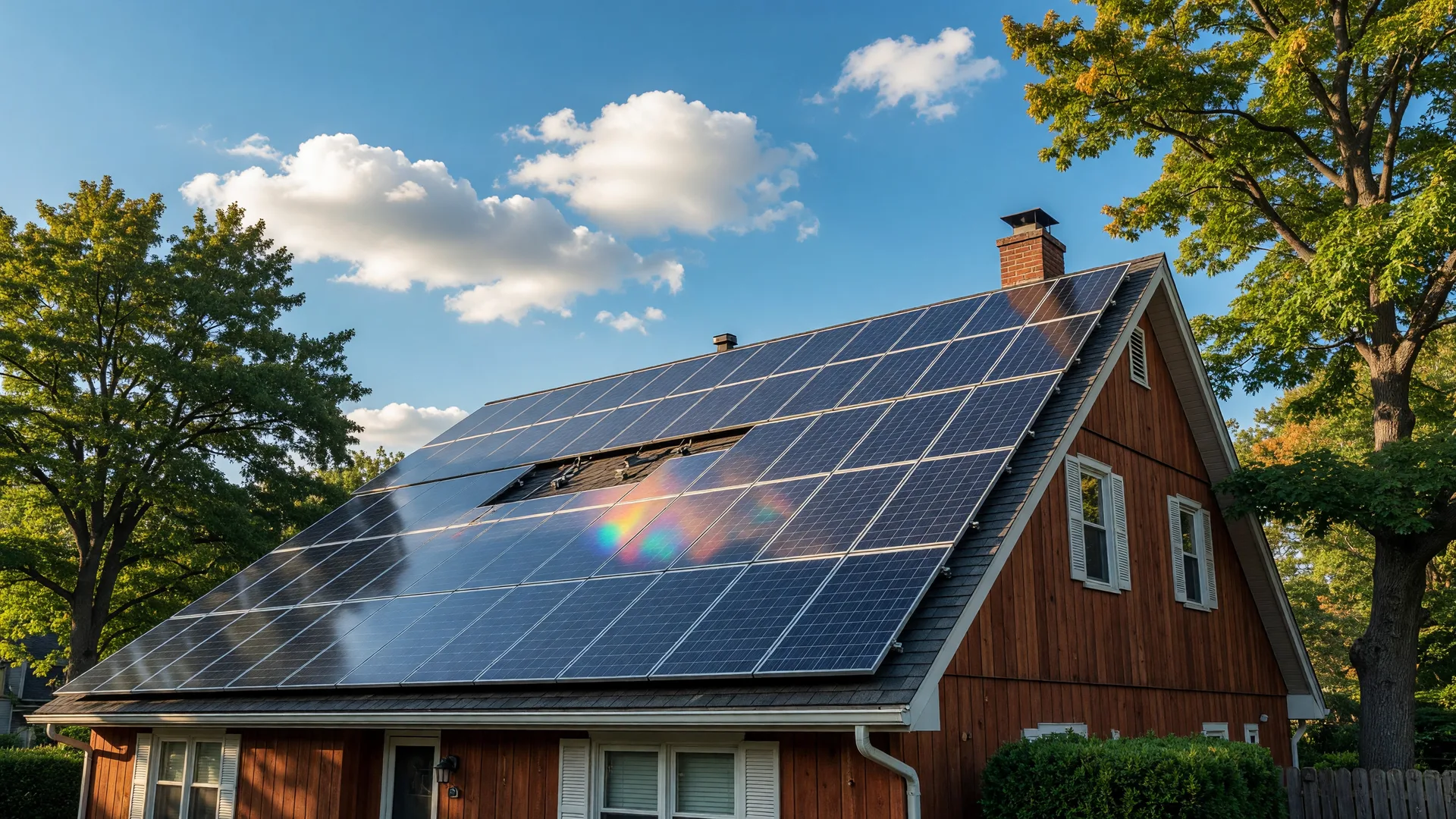
New Jersey has some of the most favorable solar policies in the country. With the Successor Solar Incentive (SuSI) program, net metering, and the 30% federal tax credit, South Jersey homeowners are well positioned to save thousands of dollars by installing solar panels. But is it the right investment for your home?
The short answer: for most Burlington County homeowners, solar panels are absolutely worth it. New Jersey ranks among the top states for solar adoption, and South Jersey's climate actually supports strong solar production. But the financial return depends on several factors specific to your property, including roof orientation, shading, energy usage, and your installer choice.
In this guide, I will walk through exactly what solar costs in South Jersey, what incentives are available, how long it takes to break even, and how to choose the right installer for your Burlington County home.
How Does Solar Work in New Jersey?
Solar panels convert sunlight into electricity through photovoltaic (PV) cells. An inverter converts the DC power into AC power your home can use. When your panels produce more electricity than you need, the excess flows back to the grid and you earn credits through net metering.
New Jersey's net metering policy requires utility companies to credit you at the full retail rate for any excess electricity your system generates. This means your electric meter literally runs backward when your panels are producing more than your home is consuming. You can bank these credits and use them on cloudy days or at night when your panels are not producing.
What NJ Solar Incentives Are Available?
New Jersey offers some of the best solar incentives in the nation. Here is what South Jersey homeowners can take advantage of:
Federal Investment Tax Credit (ITC)
The federal solar tax credit allows you to deduct 30% of your solar installation costs from your federal taxes. There is no cap on the credit amount. If you spend $25,000 on a solar system, you get a $7,500 tax credit. This credit is available through 2032, then steps down to 26% in 2033 and 22% in 2034.
Successor Solar Incentive (SuSI) Program
New Jersey's SuSI program replaced the old SREC (Solar Renewable Energy Certificate) system in 2021. Under SuSI, residential solar owners earn Transitional Renewable Energy Certificates (TRECs) for every megawatt-hour (MWh) their system produces. These certificates are sold to utility companies through a competitive solicitation process, providing a steady revenue stream for 15 years.
For a typical 8 kW residential system in South Jersey, the SuSI program generates approximately $800 to $1,200 per year in additional income, depending on the current TREC pricing and your system's actual production.
Net Metering
New Jersey's net metering policy ensures you get full retail credit for excess electricity your solar panels produce. This is one of the most valuable incentives because it effectively allows you to use the grid as a free battery. PSE&G, Atlantic City Electric, and Jersey Central Power & Light all participate in net metering across South Jersey.
Property Tax Exemption
New Jersey law exempts the added value of a solar energy system from property tax assessments. So while your home value increases with solar panels, your property taxes do not go up as a result. This is a significant benefit that not all states offer.
How Much Do Solar Panels Cost in South Jersey?
The cost of solar panels has dropped dramatically over the past decade. In South Jersey, the average residential solar installation costs between $2.80 and $3.50 per watt before incentives. For a typical 8 kW system (sufficient for most South Jersey homes), that works out to $22,400 to $28,000 before incentives.
After the 30% federal tax credit, your out-of-pocket cost drops to $15,680 to $19,600. And when you factor in the SuSI program payments over 15 years, the net cost can be significantly lower.
Here is a realistic cost breakdown for a typical South Jersey home:
- System size: 8 kW (20 to 24 panels)
- Gross cost: $24,000 (average)
- Federal tax credit (30%): -$7,200
- Net cost after ITC: $16,800
- Estimated SuSI payments (15 years): $12,000 to $18,000
- Estimated electricity savings (25 years): $30,000 to $45,000
How Long Does It Take to Break Even?
For most South Jersey homeowners, the payback period for solar panels is 6 to 10 years. This factors in the federal tax credit, SuSI program payments, and monthly electricity savings. After the payback period, your electricity is essentially free for the remaining 15 to 20 years of the system's lifespan.
Solar panels typically last 25 to 30 years with minimal maintenance. Most manufacturers offer a 25-year performance warranty, and panels generally degrade at about 0.5% per year, meaning they still produce around 88% of their original output after 25 years.
The total return on investment over 25 years for a typical South Jersey solar installation is 200% to 400%, depending on your electricity rates, system size, and available incentives.
Does South Jersey Get Enough Sun for Solar?
A common misconception is that solar panels only work in sunny states like Arizona or California. In reality, solar panels work efficiently in virtually any climate. New Jersey receives an average of 4 to 4.5 peak sun hours per day, which is more than enough for a cost-effective solar installation.
Germany, the global leader in solar adoption, receives fewer sun hours than New Jersey. Solar panels are more efficient in cooler temperatures, so South Jersey's moderate climate actually helps panels perform better than they would in extremely hot climates. Snow cover is rarely an issue, and panels are typically mounted at an angle that allows snow to slide off easily.
Burlington County specifically receives excellent solar exposure. Towns like Moorestown, Medford, Mount Laurel, and Marlton have strong solar potential with few shading issues in most residential neighborhoods.
How Do You Choose a Solar Installer in South Jersey?
Choosing the right installer is the most important decision you will make when going solar. Here is what to look for:
- Licensed and insured in New Jersey: Verify their New Jersey business registration and contractor license. Ask for proof of liability insurance and workers compensation.
- NABCEP certification: The North American Board of Certified Energy Practitioners certification is the gold standard for solar installers. Look for installers with NABCEP-certified staff.
- Local experience: An installer who has worked in Burlington County and South Jersey understands local permitting requirements, utility interconnection processes, and the specific needs of homes in our area.
- Multiple quotes: Get at least three quotes from different installers. Compare pricing, equipment quality, warranty terms, and financing options. Do not automatically go with the cheapest bid.
- Warranty coverage: Look for a minimum 10-year workmanship warranty and 25-year equipment warranty. Understand what is covered and what is not.
- Customer reviews: Check Google, Yelp, and SolarReviews for feedback from previous customers. Pay attention to how the installer handles post-installation issues.
What Are the Best Solar Financing Options?
Most South Jersey homeowners finance their solar installation rather than paying cash. Here are the most common options:
- Cash purchase: You own the system outright and receive all incentives and savings. The highest long-term ROI, but requires the largest upfront investment.
- Solar loan: A low-interest loan specifically for solar installations. You own the system and receive the tax credit and SuSI payments. Monthly payments are typically less than your electricity bill savings.
- Solar lease: A third party owns the system and you pay a fixed monthly lease payment. No upfront cost, but you do not receive the tax credit or SuSI payments. Savings are typically lower than ownership.
- Power Purchase Agreement (PPA): You pay for the electricity the system produces at a lower rate than your utility charges. The installer owns and maintains the system. No upfront cost, but less long-term savings.
For most homeowners, a solar loan offers the best balance of affordability and long-term return. You own the system, capture all incentives, and your monthly loan payment is typically lower than your previous electricity bill.
Does Solar Increase Home Value in South Jersey?
Yes. Studies consistently show that homes with solar panels sell for a premium. A study by Zillow found that homes with solar panels sell for 4.1% more on average than comparable homes without solar. In New Jersey, where energy costs are above the national average, the premium is even higher.
Buyers in South Jersey are increasingly looking for energy-efficient features, and solar panels are at the top of that list. Homes with solar also tend to sell faster, as buyers recognize the value of lower utility costs and the environmental benefits.
For more on how green features affect home value, read our guide on how smart home technology affects your home value.
Frequently Asked Questions
How much can I save with solar panels in South Jersey?
What happens if my panels produce more electricity than I use?
Do solar panels work on cloudy days?
How long do solar panels last?
Do I need a new roof before installing solar?
Is Solar Right for Your South Jersey Home?
For most homeowners in Burlington County and South Jersey, solar panels are a smart investment that delivers strong financial returns while reducing your environmental impact. The combination of New Jersey's generous incentives, falling equipment costs, and rising electricity rates makes this an excellent time to consider going solar.
If you are thinking about solar panels for your home, I can help you understand how they affect your property value and connect you with trusted local installers. Real estate and energy efficiency go hand in hand, and I am here to help you make the best decision for your home and your family.
Contact Bob or schedule a call to discuss your goals.

Bob Millaway
Epique Realty Agent · AI Certified Agent™ · 728+ homes sold. I combine local expertise with technology to help South Jersey homeowners make confident, informed decisions about their homes and energy needs.
Contact Bob