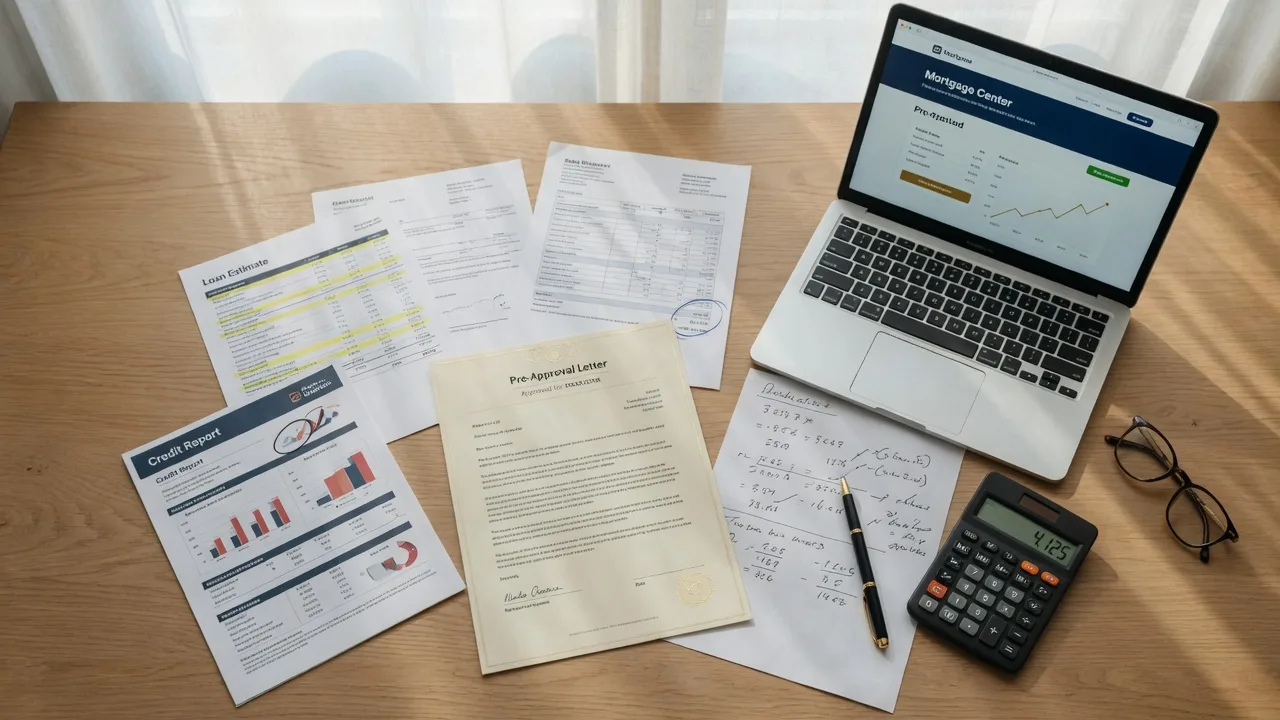
Getting pre-approved for a mortgage is the single most important step you can take before you start looking at homes. It tells you exactly how much you can afford, shows sellers you are a serious buyer, and prevents you from falling in love with a home outside your budget. In competitive Burlington County markets, most sellers will not even consider an offer without a pre-approval letter attached.
I have helped over 728 families buy homes across South Jersey, and the buyers who get pre-approved before they start looking always have the smoothest experience. They know their budget, they move quickly when they find the right home, and they rarely face last-minute financing surprises. This guide walks you through everything you need to know about the pre-approval process.
Pre-Approval vs Pre-Qualification: What Is the Difference?
Many buyers use these terms interchangeably, but they are very different. Understanding the distinction is important because it affects how sellers view your offer.
Pre-qualification is an informal estimate based on information you provide to a lender. You tell them your income, assets, and debts, and they give you a rough idea of what you might qualify for. There is no verification of your information, and a pre-qualification letter carries little weight with sellers.
Pre-approval is a formal process. You submit complete documentation of your income, assets, and credit history. The lender verifies your information, pulls your credit report, and issues a conditional commitment to lend you a specific amount. A pre-approval letter is a powerful document that tells sellers you are ready to buy.
Always get fully pre-approved, not just pre-qualified. In today's market, a pre-approval letter is the minimum standard for a credible offer.
What Documents Do You Need for Pre-Approval?
To get pre-approved, you will need to provide documentation that verifies your income, assets, and identity. Having these ready before you apply will speed up the process significantly.
Income documentation:
- Recent pay stubs covering the last 30 days
- W-2 tax forms from the last two years
- Federal tax returns (if self-employed, you may need two years of personal and business returns)
- Social Security or pension award letters if applicable
- Alimony or child support documentation if you rely on this income
Asset documentation:
- Bank statements from the last 2 to 3 months for all accounts
- Investment account statements (stocks, bonds, retirement accounts)
- Gift letter documentation if you are receiving down payment assistance from family
Additional documentation:
- Government-issued photo ID
- Rental history and landlord contact information (if applicable)
- Explanation of any gaps in employment or large deposits
Most lenders can process a complete pre-approval application in 24 to 72 hours if you provide all the necessary documentation upfront. I recommend getting your documents organized before you contact a lender so there are no delays.
How Lenders Determine How Much You Can Borrow
Lenders evaluate several factors to determine your borrowing power. Understanding these factors helps you know where you stand and what you can do to improve your position.
Credit Score
Your credit score is one of the most important factors in the pre-approval process. It directly affects the interest rate you are offered and the loan programs you qualify for. Higher credit scores mean lower rates, which translates to lower monthly payments and less paid in interest over the life of the loan.
- 760+: Best rates available
- 700-759: Good rates, broad program access
- 660-699: Competitive rates, some program restrictions
- 620-659: Higher rates, limited program options
- Below 620: FHA loan may be an option with 580+
See our detailed guide on credit score requirements for New Jersey home buyers for a complete breakdown.
Debt-to-Income Ratio (DTI)
Your DTI compares your total monthly debt payments to your gross monthly income. Lenders use this ratio to determine how much additional debt you can handle. Most lenders prefer a DTI of 36% or lower, though some loan programs allow up to 43% or even 50% with strong compensating factors like a high credit score or significant reserves.
To calculate your DTI, add up your expected monthly housing payment (principal, interest, taxes, and insurance) plus all your other monthly debt payments (car loans, student loans, credit card minimums, personal loans). Divide that total by your gross monthly income.
For example, if your gross monthly income is $8,000 and your total monthly debts including the new mortgage payment would be $2,800, your DTI is 35%. That is within the acceptable range for most loan programs.
Down Payment
Your down payment affects the loan programs available to you and whether you need to pay private mortgage insurance (PMI). Here are the typical minimum down payment requirements by loan type:
- Conventional: 3% to 5% minimum (requires PMI below 20% down)
- FHA: 3.5% minimum (requires MIP for the life of the loan)
- VA: 0% down for eligible veterans and active duty
- USDA: 0% down in eligible rural and suburban areas
- NJHMFA: Down payment assistance up to $15,000 for qualified buyers
See our FHA loan vs conventional comparison for a detailed side-by-side analysis.
How to Choose a Lender
Not all lenders are the same. The lender you choose can affect your interest rate, closing costs, and how smoothly the process goes. I recommend shopping around with at least two or three lenders and comparing their Loan Estimates side by side.
What to look for in a lender:
- Local experience: A lender who understands the New Jersey market, property tax structures, and closing timelines
- Clear communication: They should explain the process clearly and be responsive to your questions
- Competitive rates and fees: Compare the APR, not just the interest rate, and ask about all lender fees
- Closing time: Ask about their typical closing timeline. Some lenders can close in 30 days, others may take 45 to 60
- Availability: Will you work with a loan officer directly or be passed to a processing team?
A local lender who knows Burlington County and South Jersey is often a better choice than a national online lender. They understand local property tax rates, New Jersey-specific programs like NJHMFA, and the nuances of our market that can affect your loan.
Common Pre-Approval Mistakes to Avoid
Over the years, I have seen buyers make the same mistakes during the pre-approval process. Avoiding these will save you time, money, and stress.
- Only talking to one lender: You might be leaving a better rate or lower fees on the table. Compare at least two or three lenders.
- Applying before checking your credit: Review your credit report first so there are no surprises. Dispute any errors before the lender pulls your credit.
- Making large financial moves before closing: Do not open new credit cards, take out new loans, change jobs, or make large unverifiable deposits after you are pre-approved. Any of these can delay or derail your closing.
- Choosing a lender based only on rate: The lowest rate is not always the best deal if the lender charges high fees or has poor customer service. Compare the total cost and the quality of service.
- Getting pre-qualified instead of pre-approved: A pre-qualification is not enough to make a competitive offer. Always get fully pre-approved.
How Long Does Pre-Approval Last?
A pre-approval letter is typically valid for 60 to 90 days, depending on the lender. If you have not found a home within that timeframe, you may need to update your documentation and renew the pre-approval. Credit scores and financial situations can change, so lenders want current information when you make an offer.
If your financial situation changes significantly after you are pre-approved, notify your lender immediately. Changes in employment, credit, or debt can affect your approved amount and may require you to adjust your budget.
Frequently Asked Questions
Does getting pre-approved hurt my credit score?
The credit inquiry from a mortgage pre-approval typically causes a small, temporary dip of 5 to 10 points. Multiple inquiries from mortgage lenders within a 14 to 45 day period are treated as a single inquiry by credit scoring models, so shopping around for the best rate will not hurt your score more than a single application.
How long does the pre-approval process take?
Most lenders can complete a full pre-approval in 24 to 72 hours if you provide all required documentation upfront. The speed depends on how quickly you submit your documents and how complex your financial situation is. Self-employed buyers or those with non-traditional income may need additional time.
Can I get pre-approved if I am self-employed?
Yes. Self-employed buyers can get pre-approved, but the process is more detailed. Lenders typically require two years of personal and business tax returns, profit and loss statements, and sometimes a CPA letter. You will need to show consistent income and a strong debt-to-income ratio.
How much does pre-approval cost?
Most lenders do not charge a fee for pre-approval. Some may charge a small fee for the credit report pull, typically $25 to $50. Ask upfront about any fees before you apply. You should not pay a significant amount of money just to get pre-approved.
What if I am pre-approved but cannot find a home in time?
Pre-approval letters are typically valid for 60 to 90 days. If your pre-approval expires, you can renew it by providing updated documentation. As long as your financial situation has not changed significantly, the renewal process is usually quick and straightforward.
Ready to Get Pre-Approved?
Getting pre-approved is the first real step toward homeownership. I work with trusted local lenders who know the Burlington County and South Jersey market and can guide you through the process with clear communication and no surprises.
If you are ready to start the conversation, reach out anytime. I would be happy to connect you with lenders I trust and help you take the first step toward buying your home.

Bob Millaway
Epique Realty Agent · AI Certified Agent · 728+ homes sold across Burlington County and South Jersey. Licensed NJ Salesperson #791082. I combine local expertise, honest guidance, and cutting-edge technology to help you make confident real estate decisions.