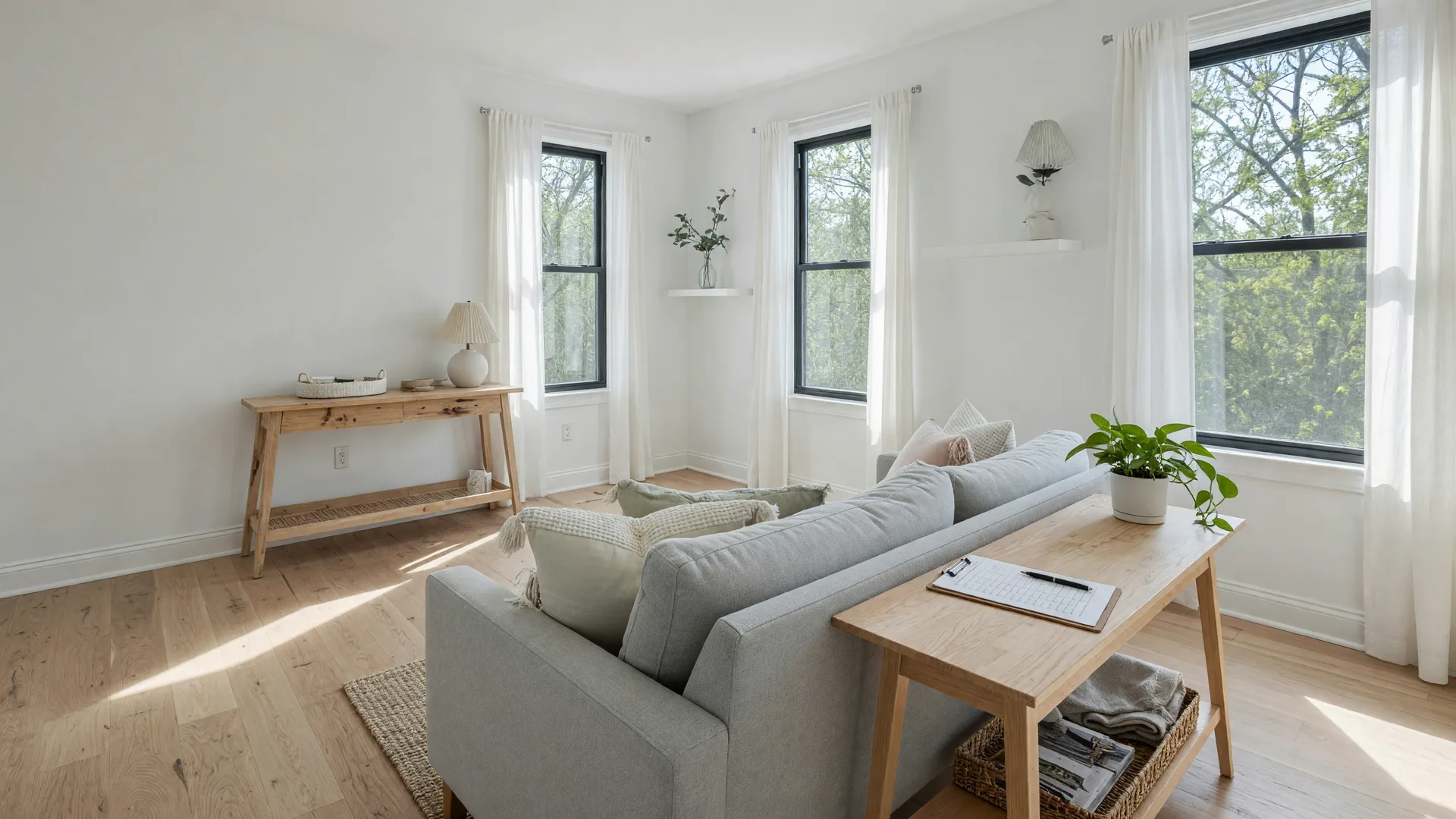
Touring homes is the most exciting part of the home buying process, but it can also be overwhelming. Between the fresh paint, staged furniture, and natural light streaming through the windows, it is easy to get swept up in the emotion of a home and miss important details. This checklist gives you a systematic way to evaluate every property you tour so you make objective, informed decisions.
I have walked through hundreds of homes with buyers across Burlington County and South Jersey. The buyers who take notes, ask questions, and use a consistent evaluation method always make better decisions. Print this checklist or save it on your phone and bring it to every showing.
Before You Walk In: The Exterior Matters
Your evaluation starts before you step through the front door. The exterior of a home tells you a lot about how well it has been maintained. Take a few minutes to walk around the property before you go inside.
Roof and Gutters
- Are there any missing, curled, or damaged shingles?
- Do the gutters appear clean and securely attached?
- Are downspouts directing water away from the foundation?
- Is there any staining on exterior walls that could indicate gutter overflow?
- How old does the roof appear? (Ask the listing agent or seller for the age)
Foundation and Grading
- Are there any visible cracks in the foundation walls?
- Does the ground slope away from the house? (Water should drain away, not toward the foundation)
- Are there any signs of water pooling near the foundation?
- Is the driveway in good condition or does it need replacement?
Siding and Windows
- Is the siding in good condition with no rot, warping, or damage?
- Do the windows appear to be in good shape? Are they double-paned?
- Is there any condensation between window panes? (That means the seal has failed)
- Do the window frames show signs of rot or water damage?
Landscape and Lot
- Are there large trees close to the house that could pose a risk or affect the foundation?
- Is the yard size what you expected from the listing photos?
- Is the landscaping well-maintained or overgrown?
- Are there any drainage issues in the yard after rain?
Inside the Home: Room by Room Evaluation
Once you are inside, resist the urge to focus only on cosmetic features like paint colors and light fixtures. Those are easy and inexpensive to change. Focus on the structural and mechanical elements that are costly to repair or replace.
Living Room, Dining Room, and Common Areas
- Does the layout work for how you actually live? Stand in the space and imagine your furniture.
- Is there enough natural light? What direction do the windows face?
- Are the floors in good condition? Check for hardwood under carpet.
- Look at the ceiling and walls for any water stains, cracks, or signs of past leaks.
- Are there enough electrical outlets? Do they appear modern or outdated?
Kitchen
The kitchen is one of the most expensive rooms to renovate, so pay close attention here. Look beyond the countertops and cabinet fronts to the things that matter most.
- How old are the appliances? Ask about the age of the refrigerator, stove, dishwasher, and any other built-in appliances.
- Open the cabinet doors and drawers. Do they function smoothly? Check for water damage under the sink.
- Turn on the faucet. Does the water pressure feel strong? Does the water drain quickly?
- Is there adequate counter space and storage for your needs?
- Does the kitchen layout work for your cooking style?
Bathrooms
- Flush the toilet. Does it flush properly and fill back up without running?
- Turn on the shower and sink. Check water pressure and temperature.
- Look for signs of water damage around the tub, shower, and toilet.
- Check the caulking and grout. Is it clean and intact or cracked and moldy?
- Is there ventilation (an exhaust fan or window)? Moisture buildup can lead to mold.
Bedrooms
- Are the bedrooms large enough for your furniture? Measure if needed.
- Is there adequate closet space? Open the closet doors and check the size.
- Are the windows egress-rated? In a basement bedroom, this is a safety requirement.
- Check for any signs of pests, water damage, or drafts near windows.
Basement and Crawlspace
- Is the basement finished or unfinished? If finished, ask if it was permitted.
- Look for water stains, efflorescence (white mineral deposits), or musty odors.
- Check for cracks in the basement walls or floor.
- Is there a sump pump? Ask how often it runs and if there have been flooding issues.
- Look at the HVAC system, water heater, and electrical panel. How old are they?
Attic
- Is there adequate insulation? In New Jersey, you want at least R-38 in the attic.
- Are there any signs of roof leaks, staining, or daylight coming through the roof?
- Is the attic ventilated properly? Good ventilation prevents ice dams in winter.
- Look for any signs of pests or rodent activity.
Mechanical Systems: The Big-Ticket Items
The mechanical systems of a home are expensive to replace. Knowing their age and condition helps you plan for future expenses and negotiate if needed.
Heating and Air Conditioning
- How old is the furnace or boiler? The average lifespan is 15 to 20 years.
- How old is the air conditioning unit? Average lifespan is 10 to 15 years.
- Ask about the last service date. Regular maintenance extends the life of these systems.
- What type of heating system does the home have? Forced air, radiant, baseboard?
Plumbing and Electrical
- What type of plumbing does the home have? Copper is preferred. Avoid polybutylene.
- How old is the water heater? Typical lifespan is 8 to 12 years.
- What is the electrical service amperage? 200 amp service is standard for modern homes.
- Is the electrical panel a modern breaker panel or an older fuse box?
Questions to Ask the Listing Agent or Seller
Your agent can help you gather important information about the property. Here are the questions I always recommend asking:
- How long has the home been on the market?
- Have there been any price reductions?
- Why is the seller moving? (Motivation can affect negotiation)
- What is included in the sale? Appliances, light fixtures, window treatments?
- Are there any known issues with the property?
- Have there been any recent renovations or major repairs?
- What are the average monthly utility costs?
- Are there any HOA fees or restrictions?
- What are the annual property taxes?
- Which school district serves this address?
How to Compare Homes Objectively
After touring several homes, they can start to blur together. Here is how I help my buyers compare properties objectively:
- Take photos and notes at every showing. Your memory will not be reliable after seeing five homes in one day.
- Rate each home on your key criteria. Location, layout, condition, price, and must-have features.
- Think about the cost of needed repairs. A lower-priced home that needs significant work may not be the bargain it appears to be.
- Consider resale value. Even if you plan to stay for years, think about what the home would be like to sell someday.
- Trust your instincts. If a home does not feel right, it probably is not. But make sure your instinct is based on substance, not staging.
Red Flags That Should Give You Pause
Some issues are minor and easily fixed. Others are expensive problems that should make you think twice. Here are red flags to take seriously:
- Water stains or musty odors: Could indicate past or ongoing water intrusion, which can lead to mold and structural damage.
- Major foundation cracks: Hairline cracks are normal. Horizontal or stair-step cracks are concerning.
- Outdated electrical: Knob-and-tube wiring or a fuse box can be expensive to upgrade and may affect your insurance.
- DIY renovations without permits: Unpermitted work can create safety issues and headaches when you sell.
- Uneven floors or doors that do not close properly: Could indicate foundation movement or structural issues.
- Strong air freshener or paint smell: Sometimes used to mask odors from mold, pets, or smoking.
Frequently Asked Questions
How many homes should I tour before making an offer?
There is no magic number, but most buyers tour 8 to 15 homes before finding the right one. The key is to see enough variety to understand what is available in your price range and which features matter most to you. Some buyers know after three homes. Others need to see 20. Take the time you need.
Should I bring a contractor to home showings?
For most homes, a general home inspection during the due diligence period is sufficient. However, if you are considering a fixer-upper or a home with visible issues, bringing a contractor to a second walkthrough can give you a realistic estimate of repair costs before you make an offer.
How do I know if a home is priced fairly?
Your agent will prepare a comparative market analysis (CMA) that shows recent sales of similar homes in the same area. This is the most reliable way to determine fair market value. Online estimates can be a starting point but are often inaccurate for specific properties.
What if I find a problem during the tour?
Not every problem is a dealbreaker. Cosmetic issues are easy to fix. Structural, mechanical, or water-related issues are more serious. Note any concerns and discuss them with your agent. The home inspection will provide a thorough evaluation of all systems and components.
Can I tour a home without my agent?
You can attend open houses without your agent, but for private showings, it is best to have your agent present. They can point out issues you might miss, answer questions about the neighborhood and market, and help you evaluate the property objectively. Their representation is at no cost to you in most transactions.
Ready to Start Touring Homes?
Touring homes is one of the best parts of the home buying journey, especially when you have a clear plan and an experienced agent by your side. I help my buyers stay organized, focused, and objective throughout the process, so they find the right home without the stress.
If you are ready to start touring homes in Burlington County or South Jersey, reach out anytime. I would love to help you find the home that is right for you.

Bob Millaway
Epique Realty Agent · AI Certified Agent · 728+ homes sold across Burlington County and South Jersey. Licensed NJ Salesperson #791082.