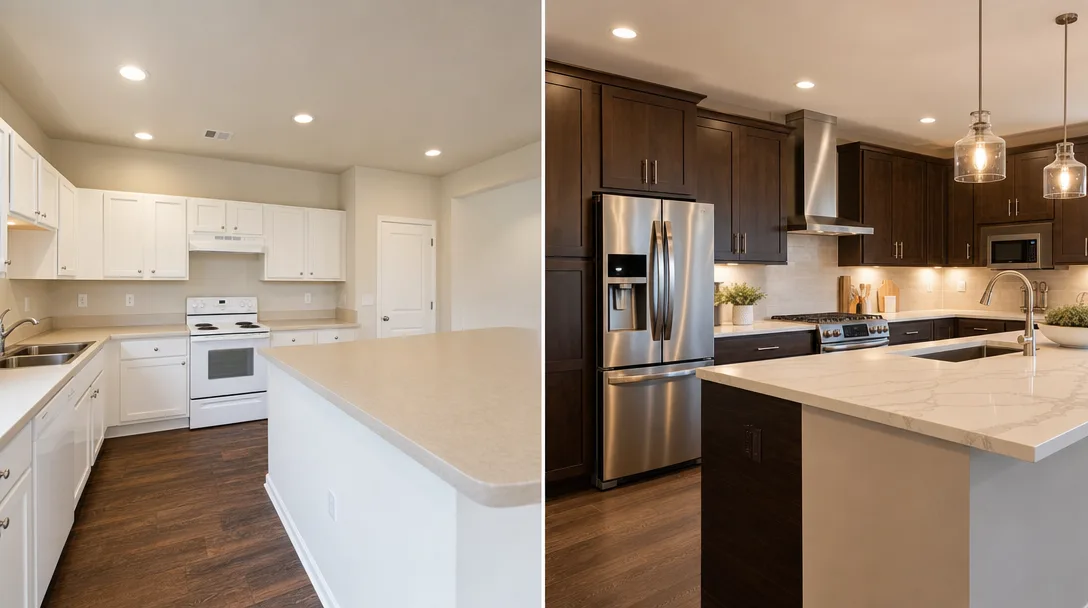
Walking into a builder's design center for the first time is overwhelming. There are dozens of options for countertops, cabinets, flooring, fixtures, appliances, and more. The base model looks fine, but the upgraded model with the quartz countertops, hardwood floors, and premium cabinets looks like a different home entirely. Before you know it, the upgrade list has added $50,000 or more to the price of your home.
I have helped many clients through the upgrade selection process, and the most common question I hear is: which upgrades are worth the money and which ones are a waste? This guide breaks down the most common new construction upgrades, what they cost, and whether they deliver real value.
How Do Builder Upgrades Work?
When you buy a new construction home, the base price includes a standard set of finishes. Builders call these "builder-grade" or "standard" selections. They are functional but basic. The white laminate countertops, the beige carpet, the stock light fixtures, and the basic appliances are all included in the base price.
The design center is where you choose upgrades. Each upgrade has a price, and the total cost of your upgrades is added to the purchase price of the home. Some builders include upgrade allowances in their base pricing, while others charge a premium for every change.
The key to making smart upgrade decisions is understanding which upgrades add value to your home and your life, and which ones are overpriced or unnecessary. Here is my breakdown of the most common upgrades.
Upgrades That Are Usually Worth the Money
Hardwood Flooring
Upgrading from standard carpet to hardwood flooring in main living areas is almost always worth it. Hardwood floors are durable, easy to clean, and appeal to a wide range of buyers when you eventually sell. They also make the home feel more substantial and higher quality. While the upfront cost is significant, the return on investment is strong.
If the full hardwood upgrade is outside your budget, consider upgrading only the main living areas and keeping carpet in the bedrooms. This gives you the best of both worlds: hardwood where it matters most and carpet where you want comfort.
Kitchen Countertops
The standard countertop in most new construction homes is laminate or a basic solid surface. Upgrading to quartz or granite is one of the most popular upgrades, and for good reason. Quartz and granite are more durable, more attractive, and more appealing to future buyers. The upgrade cost is typically $2,000 to $5,000 depending on the size of the kitchen and the material you choose, and it adds significant value to the home.
Kitchen Backsplash
The standard backsplash in many new homes is a simple 4-inch slab of the countertop material. Upgrading to a full tile backsplash is a relatively small investment that makes a huge visual impact. It is one of the first things people notice in a kitchen, and it is a relatively inexpensive way to elevate the look of the entire space.
Energy-Efficient Windows and Insulation
Upgraded windows and insulation packages pay for themselves over time through lower utility bills. If the builder offers an energy efficiency upgrade package, it is usually worth taking. You will save money every month on heating and cooling, and the home will be more comfortable year-round.
Additional Electrical Outlets and Lighting
Adding extra outlets, USB charging ports, and upgraded light fixtures during construction is much cheaper than doing it after you move in. It costs a few hundred dollars to add outlets during framing, but it could cost thousands to add them later. Think about where you will want outlets in each room, and add them now.
Upgrades That Are Usually Not Worth the Money
Premium Appliances
Builder appliance packages are often overpriced. The standard appliances included in the base price are typically from reputable brands and work perfectly well. Upgrading to the premium line of the same brand can add $3,000 to $8,000 to the price, and you may not recoup that cost when you sell. If you really want high-end appliances, consider buying them yourself after closing, when you can shop sales and compare prices.
Landscaping Upgrades
Builder landscaping packages are often expensive and limited in scope. The standard landscaping typically includes basic grass, a few shrubs, and mulch. The upgraded packages add more plants, trees, and hardscaping, but at a significant markup. Consider accepting the standard landscaping and upgrading it yourself over time. You can choose your own plants, hire your own landscaper, and get better value for your money.
Premium Paint Colors
Many builders charge hundreds or even thousands of dollars for custom paint colors. The standard paint is usually a neutral off-white or beige that works well with any decor. If you want different colors, it is almost always cheaper to paint the rooms yourself after closing. A gallon of paint costs $40 to $60, and a painter can paint an entire room for a few hundred dollars.
Finished Basements
Builder-finished basements are notoriously expensive. The markup on basement finishing can be 50% or more compared to hiring a contractor after closing. If you want a finished basement, it is almost always better to wait and have it done after you move in. You will also have the advantage of living in the home first and understanding exactly how you want to use the space.
Structural Changes That Add Square Footage
Adding a bedroom, extending a room, or adding a sunroom are expensive upgrades that rarely deliver full return on investment. While you may want the extra space, the builder's per-square-foot cost for these additions is typically higher than the value they add to the home. Consider whether a different floor plan or a larger base model might be a better value.
How Much Should I Budget for Upgrades?
A reasonable upgrade budget for a new construction home is typically 5% to 15% of the base price. On a $500,000 home, that means $25,000 to $75,000 in upgrades. Your budget depends on your overall financial picture and what you value most.
If you are financing the upgrades as part of your mortgage, remember that every dollar in upgrades increases your monthly payment. A $50,000 upgrade package adds approximately $300 to $400 per month to your mortgage payment, depending on interest rates and loan terms.
Here is a practical approach to setting your upgrade budget:
- Start with the base price and determine what you can afford for a monthly payment
- Identify the upgrades that matter most to you (hardwood floors, countertops, backsplash)
- Get pricing from the builder for those upgrades
- Prioritize upgrades that add value and enjoyment, and skip the rest
- Leave room in your budget for things the builder does not provide, like window treatments, light fixtures you want to swap, and furniture
Can I Negotiate Upgrade Prices?
Yes, in many cases. Builders have more flexibility on upgrade pricing than on base home prices. Here are some strategies for negotiating:
- Bundle upgrades: Ask if the builder offers package pricing for multiple upgrades
- Ask for closing cost credits instead: Sometimes the builder would rather give you a credit toward closing costs than reduce the price of upgrades
- Negotiate during slower periods: Builders are more willing to deal when they have inventory to move
- Work with an agent: An experienced buyer's agent can help you negotiate upgrade pricing and identify opportunities you might miss on your own
Frequently Asked Questions About New Construction Upgrades
What is the most important upgrade to consider?
Hardwood flooring in main living areas is the upgrade that delivers the most value for both enjoyment and resale. Kitchen countertops (quartz or granite) are a close second.
Can I add upgrades after closing?
Yes, but some upgrades are much cheaper to do during construction. Anything behind the walls (extra outlets, wiring, plumbing) is best done during the build. Cosmetic upgrades like paint, light fixtures, and appliances can be done later at comparable or lower cost.
How much do builder upgrades typically cost?
Upgrade costs vary widely by builder and material. Expect to pay $2,000 to $5,000 for quartz countertops, $3,000 to $8,000 for hardwood flooring, and $500 to $2,000 for a tile backsplash. Premium appliance packages can add $3,000 to $10,000 or more.
Are builder upgrades overpriced compared to doing them later?
Some upgrades are fairly priced, while others carry significant markups. Structural changes, finished basements, and landscaping are typically overpriced. Flooring, countertops, and electrical upgrades are more competitively priced and worth doing through the builder.
Should I finance upgrades or pay cash?
If you can afford to pay cash for upgrades, that is the cheapest option. If you finance them as part of your mortgage, you will pay interest on them for the life of the loan. Consider the total cost carefully before adding upgrades to your loan amount.
Making Smart Upgrade Decisions
The best upgrade strategy is to prioritize the upgrades that matter most to you and that add real value to your home. Focus on the finishes you will see and use every day, like flooring and countertops. Skip the upgrades that are overpriced or that you can do later for less.
I have helped many clients navigate the upgrade selection process, and I can help you evaluate your options, set a budget, and negotiate with the builder. My goal is to help you make confident decisions that align with your priorities and your budget.

Bob Millaway
Epique Realty Agent and AI Certified Agent with 20+ years of experience and 728+ homes sold across Burlington County and South Jersey. Bob combines local expertise, honest guidance, and cutting-edge technology to help buyers and sellers make confident real estate decisions.
About Bob