Reducing your home's energy consumption is one of the most effective ways to lower your carbon footprint and save money on utility bills. For South Jersey homeowners, the combination of New Jersey's cold winters, humid summers, and above-average energy costs makes energy efficiency a particularly smart investment.
The average South Jersey household spends $2,500 to $3,500 per year on electricity and heating. With strategic energy efficiency upgrades, you can reduce that by 20% to 40% or more. And thanks to the New Jersey Clean Energy Program, many of these upgrades come with significant rebates that lower the upfront cost.
This guide covers the most impactful steps you can take to make your Burlington County home more energy efficient. From professional energy audits to insulation upgrades, window replacements, and HVAC improvements, here is everything you need to know.
What Is a Home Energy Audit and Why Do You Need One?
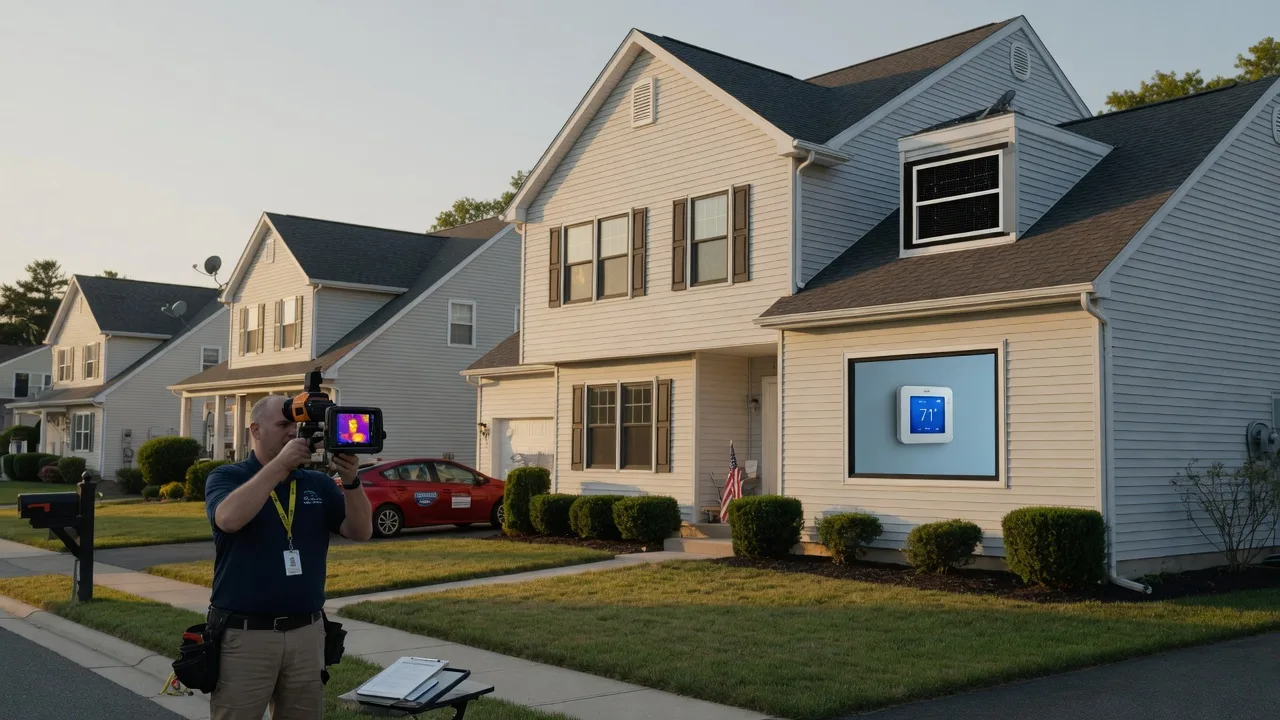
A home energy audit is the logical first step in any energy efficiency project. An auditor uses specialized equipment including a blower door test, thermal imaging camera, and combustion analyzer to identify exactly where your home is losing energy and what improvements will be most cost-effective.
The New Jersey Clean Energy Program offers reduced-cost home energy audits through approved contractors. For a nominal fee, typically $50 to $100, a certified auditor will spend two to three hours inspecting your home and produce a detailed report with prioritized recommendations.
What an energy audit reveals:
- Air leaks: Gaps and cracks around windows, doors, attic hatches, and utility penetrations that let conditioned air escape.
- Insulation deficiencies: Areas where insulation is missing, compressed, or inadequate for your climate zone.
- HVAC efficiency: How well your heating and cooling system is performing and whether it needs maintenance or replacement.
- Duct leakage: Leaky ductwork can lose 20% to 30% of conditioned air before it reaches your living spaces.
- Moisture issues: Areas where moisture intrusion could lead to mold or rot, reducing indoor air quality and insulation effectiveness.
The audit report gives you a clear roadmap. Instead of guessing which upgrades to prioritize, you know exactly where your money will have the greatest impact.
How Much Does Insulation Matter for Energy Efficiency?
Insulation is the single most important factor in your home's energy efficiency. Proper insulation keeps heat inside during winter and outside during summer, reducing the load on your HVAC system and cutting your energy bills significantly.
Many South Jersey homes, particularly those built before 2000, are under-insulated. The recommended R-value for attic insulation in New Jersey's climate zone is R-49 to R-60. Most older homes have R-19 to R-30, meaning they are losing a substantial amount of heat through the roof.
Key areas to insulate:
- Attic: The most impactful area. Adding insulation to an under-insulated attic can reduce heating and cooling costs by 10% to 20%.
- Walls: Exterior wall insulation, especially in older homes with no wall insulation at all, can dramatically improve comfort and efficiency.
- Basement and crawlspace: Insulating basement walls and rim joists prevents heat loss and can help prevent frozen pipes in winter.
- Floors: Insulating floors above unconditioned spaces like garages or crawlspaces reduces heat loss.
The cost of insulation upgrades varies widely. Adding blown-in attic insulation typically costs $1,500 to $3,000 for a standard South Jersey home. The energy savings often pay for the upgrade in 3 to 5 years, and the NJ Clean Energy Program offers rebates of $500 to $1,000 for qualifying insulation projects.
Should You Replace Your Windows for Energy Efficiency?
Windows are a significant source of heat loss in most homes. Single-pane windows and older double-pane windows with failed seals allow heat to transfer easily, forcing your HVAC system to work harder.
Energy-efficient windows with low-E coatings, argon gas fills, and insulated frames can reduce heat loss by 25% to 50% compared to standard single-pane windows. They also reduce drafts, improve comfort near windows, and can reduce outside noise.
However, window replacement is expensive. Expect to pay $800 to $1,200 per window installed for quality energy-efficient windows in South Jersey. A full home replacement can cost $12,000 to $25,000 or more.
The return on investment for window replacement depends on your current windows. If you have single-pane windows in poor condition, replacement makes strong financial sense. If you have reasonably modern double-pane windows, the payback period may be too long to justify replacement, and you may be better off addressing air sealing and insulation first.
The NJ Clean Energy Program offers rebates of $50 to $100 per window for qualifying ENERGY STAR certified windows, helping offset the cost.
What HVAC Upgrades Offer the Best Energy Savings?
Heating and cooling account for roughly 50% of the average home's energy consumption. Upgrading to high-efficiency HVAC equipment can dramatically reduce your energy use and carbon footprint.
Here are the most impactful HVAC upgrades for South Jersey homes:
- Heat pump systems: Modern cold-climate heat pumps are highly efficient for both heating and cooling. They can reduce electricity use for heating by up to 50% compared to electric resistance heating or baseboard heaters. For homes with existing ductwork, a heat pump is often the best upgrade available.
- High-efficiency gas furnace: If you have natural gas heating, upgrading from an 80% AFUE furnace to a 96% AFUE condensing furnace saves about 17% on your heating bill.
- Duct sealing: Sealing and insulating ductwork in unconditioned spaces like attics and crawlspaces can improve system efficiency by 20% to 30%.
- Smart thermostats: A programmable or smart thermostat can save 10% to 15% on heating and cooling costs by automatically adjusting temperatures when you are asleep or away.
- Regular maintenance: Annual HVAC maintenance keeps your system running at peak efficiency. A neglected system can lose 5% to 10% of its efficiency each year.
The NJ Clean Energy Program offers substantial rebates for qualifying HVAC upgrades. Heat pump rebates can be $1,000 to $2,000 or more, and high-efficiency furnace rebates range from $500 to $1,500 depending on the efficiency level.
What Are the Best Smart Home Upgrades for Energy Efficiency?
Smart home technology can make your home more energy efficient with minimal effort. The most impactful smart home upgrades include:
- Smart thermostats: Devices like the Nest Learning Thermostat or Ecobee learn your schedule and automatically adjust temperatures. They also provide energy usage reports and can be controlled remotely from your phone.
- Smart lighting: LED bulbs use 75% less energy than incandescent bulbs and last 25 times longer. Adding smart controls and motion sensors ensures lights are never left on unnecessarily.
- Smart power strips: These eliminate standby power consumption from electronics and appliances when they are not in use.
- Smart water heaters: Wi-Fi connected water heaters can be programmed to heat water during off-peak hours when electricity rates are lower.
For more on how smart home technology affects your home value, read our guide on how smart home technology affects home value in South Jersey.
What NJ Clean Energy Program Rebates Are Available?
The New Jersey Clean Energy Program (NJCEP) is one of the most comprehensive state energy efficiency programs in the country. Here are the key rebates available to South Jersey homeowners in 2026:
- Home Performance with ENERGY STAR: Up to $4,000 in rebates for comprehensive energy efficiency improvements including insulation, air sealing, and HVAC upgrades. Requires a Home Performance audit through an approved contractor.
- HVAC equipment rebates: $500 to $2,000 for qualifying high-efficiency furnaces, boilers, central air conditioners, and heat pumps.
- Water heater rebates: $300 to $750 for qualifying high-efficiency water heaters, including heat pump water heaters.
- Window rebates: $50 to $100 per window for ENERGY STAR certified windows.
- Smart thermostat rebates: $50 to $100 for qualifying smart thermostats.
- Low-income programs: The Universal Service Fund (USF) and LIHEAP provide additional assistance for qualifying low-income households.
Rebate programs change frequently, so it is important to check current offerings before starting your project. Your energy auditor or contractor can help you navigate the available incentives.
How Do Energy Efficient Homes Affect Property Value?
Energy efficiency is increasingly important to home buyers. Studies show that homes with ENERGY STAR certification or documented energy efficiency features sell for 2% to 5% more than comparable homes without those features. In South Jersey, where utility costs are high, buyers are particularly motivated to find efficient homes.
Energy-efficient homes also tend to sell faster. A study by the U.S. Department of Energy found that ENERGY STAR certified homes sell an average of 22 days faster than non-certified homes. For sellers, this means less time on the market and fewer price reductions.
If you are planning to sell your South Jersey home, investing in energy efficiency improvements can be a smart strategy. Focus on the improvements that offer the best combination of energy savings and buyer appeal: insulation, HVAC upgrades, and smart home features.
For more on home improvements that increase value, see our guide on home improvements that actually increase your home value.
Frequently Asked Questions
How much can I save by making my home energy efficient?
What is the most cost-effective energy efficiency upgrade?
How do I get a home energy audit in South Jersey?
Are there tax credits for energy efficiency improvements?
How long does it take to recoup energy efficiency upgrade costs?
Start Your Energy Efficiency Journey
Making your South Jersey home more energy efficient is one of the best investments you can make. It saves money, increases comfort, reduces your carbon footprint, and adds value to your home. The combination of NJ Clean Energy rebates and federal tax credits makes this an excellent time to invest.
Whether you are buying a home and want to assess its energy performance, or you are planning upgrades to your current home, I can help you understand the local market and connect you with trusted professionals.
Contact Bob or schedule a call to discuss your energy efficiency goals.

Bob Millaway
Epique Realty Agent · AI Certified Agent™ · 728+ homes sold. I help South Jersey homeowners make confident decisions about their homes, from energy efficiency to smart upgrades and everything in between.
Contact Bob