Most older adults want to stay in their own homes as they age. It is a desire I hear from clients every week: "I want to stay here, Bob. This is my home. I just need to make it work." The good news is that with thoughtful modifications, most homes in South Jersey can be adapted for safe, comfortable aging in place.
Aging in place means making your home safer, more accessible, and easier to navigate as your mobility and physical needs change. Whether you are planning ahead or responding to a recent health concern, this guide covers the most impactful home modifications for aging in place in Burlington County and South Jersey.
What Does It Mean to Age in Place?
Aging in place is the ability to live in your own home safely, independently, and comfortably regardless of age, income, or ability level. It is not about making your home look like a hospital. It is about making thoughtful changes that reduce risk, improve accessibility, and allow you to continue enjoying the home and community you love.
In Burlington County, aging in place is especially practical because many homes already have features that support it: ranch-style homes, smaller lots, and quiet neighborhoods with sidewalks and nearby amenities. But even a traditional two-story colonial can be adapted with the right modifications.
What Are the Most Important Home Modifications for Aging in Place?
Not every modification needs to happen at once. Here are the most impactful changes, prioritized by safety and cost:
1. Bathroom Safety Improvements
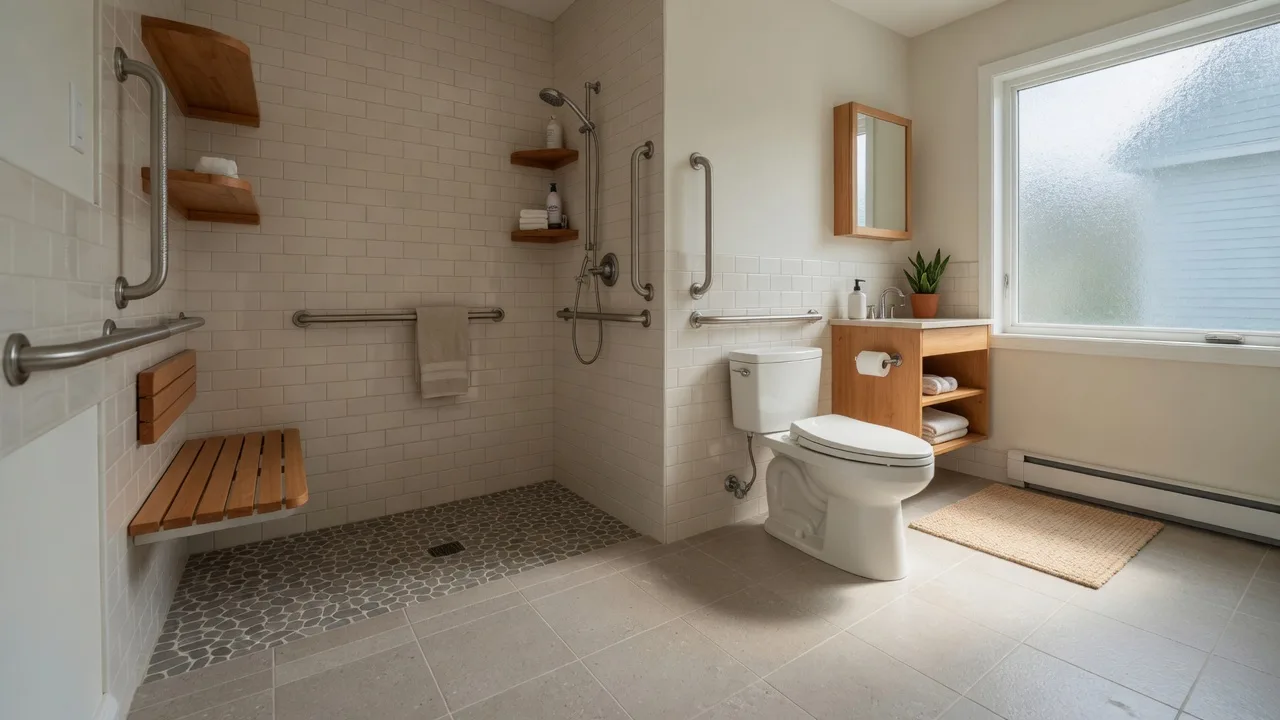
The bathroom is the most dangerous room in the home for older adults. Falls in the bathroom account for a significant percentage of senior injuries. The most effective upgrades include:
- Grab bars near the toilet and in the shower or tub. These are inexpensive, easy to install, and can prevent a life-changing fall. Install them at a height that is comfortable for the user and anchored into wall studs or blocking.
- Walk-in shower with a bench or seat. Stepping over a tub wall becomes increasingly difficult and dangerous. A curbless walk-in shower with a built-in bench eliminates that step-over hazard.
- Comfort-height toilet. Standard toilets are about 15 inches high. Comfort-height toilets are 17 to 19 inches, making it much easier to sit down and stand up.
- Handheld shower head. Allows for seated showering and makes it easier to control water direction.
- Non-slip flooring. Replace slick tile with textured flooring or apply non-slip treatments to existing surfaces.
- Good lighting. Bright, glare-free lighting reduces the risk of missteps and falls, especially at night.
2. Single-Floor Living
Stairs become a significant obstacle as mobility declines. The goal of aging in place is to have everything you need on one floor: a bedroom, a full bathroom, the kitchen, and laundry. If your home has a first-floor space that could be converted into a bedroom, that is one of the most valuable modifications you can make.
- Convert a den, office, or dining room into a first-floor bedroom. Many South Jersey colonials have a room near an existing half bath or full bath that can serve as a bedroom with minimal construction.
- Install a stairlift if a first-floor bedroom is not possible. Stairlifts are more affordable than moving and can be installed in a day. They are also removable when no longer needed.
- Relocate laundry to the main floor. If your washer and dryer are in the basement, moving them to the first floor (even into a closet or pantry) eliminates a major fall risk.
3. Entryway Accessibility
- Zero-step entry. Eliminate the step or threshold at your front door or a side door. A concrete ramp or graded walkway can make entry wheelchair and walker accessible.
- Widen doorways. Standard doorways are 30 to 32 inches. Wheelchairs and walkers need at least 32 to 36 inches. Widening the front door and the bathroom door is the highest priority.
- Lever-style door handles. Much easier to operate than round knobs for people with arthritis or reduced hand strength.
4. Kitchen Modifications
- Pull-out shelves and drawers. Reach items without bending or stretching. Install these in lower cabinets.
- Side-by-side refrigerator. Allows access to both the fridge and freezer without reaching overhead.
- Touch-activated faucet. Reduces the need for grip strength and makes kitchen tasks easier.
- Lower countertop work area. If you use a wheelchair, consider a section of countertop at a lower height for food preparation.
5. Smart Home Technology
Smart home technology has become more affordable and easier to use, and it can significantly improve safety and convenience for seniors aging in place:
- Smart doorbells and locks. See and speak to visitors without walking to the door. Lock and unlock remotely.
- Motion-activated lighting. Lights that turn on automatically when you enter a room or get out of bed at night reduce the risk of falls in the dark.
- Medical alert systems. Wearable devices that let you call for help with the press of a button. Modern systems can detect falls automatically and do not require a landline.
- Smart thermostats and voice assistants. Control temperature, lights, and entertainment with your voice, reducing the need to walk across the room or manipulate small controls.
- Video monitoring. Family members can check in remotely, providing peace of mind for everyone.
How Much Do Aging-in-Place Modifications Cost?
The cost of modifying a home for aging in place ranges from a few hundred dollars to tens of thousands, depending on the scope of work. Here is a rough guide:
- Grab bars and basic safety items: $100 to $500 per bathroom.
- Walk-in shower conversion: $3,000 to $8,000 depending on complexity.
- Stairlift (straight staircase): $2,000 to $5,000 installed.
- First-floor bedroom conversion: $1,000 to $10,000 depending on whether you need to add a closet or bathroom.
- Zero-step entry ramp: $500 to $3,000 depending on materials and length.
- Smart home system (basic): $200 to $1,000.
- Full bathroom remodel for accessibility: $10,000 to $25,000.
Some modification costs may be tax-deductible as medical expenses if they are prescribed by a doctor. The New Jersey Home Modification Program also offers financial assistance for income-eligible seniors. It is worth researching these options before starting your project.
What South Jersey Home Styles Work Best for Aging in Place?
Some home styles require fewer modifications than others. Ranch homes and single-story homes are the most naturally suited to aging in place because everything is on one level. If you are considering buying a home specifically for aging in place, here are the features to prioritize:
- Single-story or first-floor master suite. The single most important feature.
- Open floor plan. Fewer walls and wider pathways make it easier to navigate with a walker or wheelchair.
- Wide hallways and doorways. At least 36 inches for doorways and 42 inches for hallways.
- Low-maintenance exterior. Vinyl siding, composite decking, and xeriscaping reduce the physical burden of outdoor upkeep.
- Bathroom on the same floor as the bedroom. Ideally with a walk-in shower.
Many towns in Burlington County have excellent inventory of ranch homes and single-story condos. Some of the best areas include Cinnaminson, Delran, Lumberton, Mount Laurel, and Burlington Township. If you are not sure whether to modify your current home or move to one that is already more accessible, I can help you weigh the costs and benefits of each option.
Frequently Asked Questions About Aging in Place
Should I modify my current home or move to a more accessible one?
Are there financial assistance programs for home modifications in New Jersey?
Do home modifications increase property value?
Can I age in place in a two-story colonial?
Plan for Your Future Today
Whether you are planning modifications for your current home or considering a move to a more accessible property, I can help you evaluate your options. The best time to plan for aging in place is before you need it.
Contact Bob or schedule a consultation to discuss your aging in place goals.
Bob Millaway
Epique Realty Agent · AI Certified Agent™ · 728+ homes sold. I help South Jersey families plan for their future with honest guidance and local expertise. Whether you are modifying your home or finding a new one, I am here to help.
Contact Bob