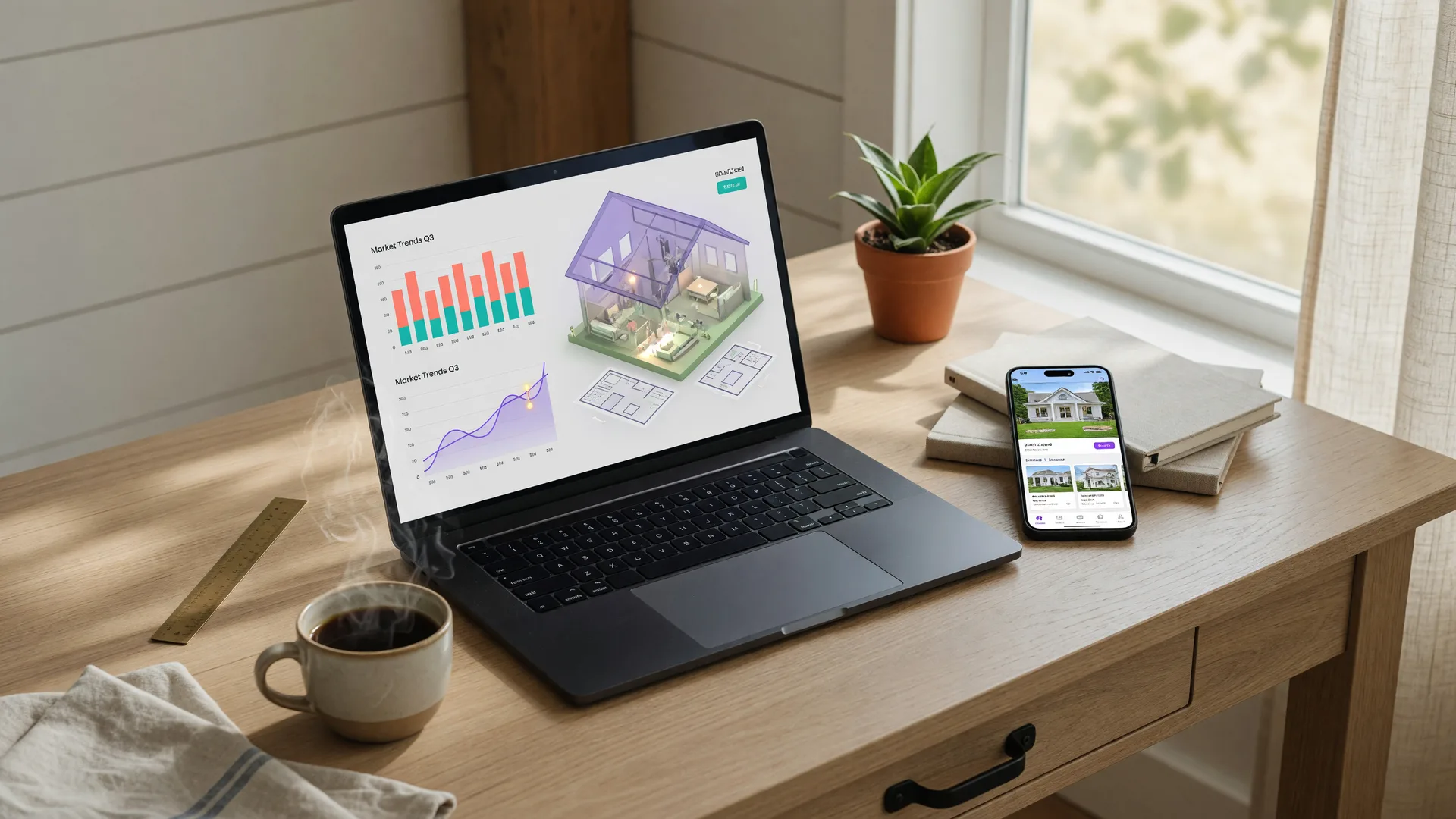
AI-powered pricing uses machine learning models to analyze thousands of data points including recent comparable sales, property characteristics, market trends, and economic indicators in seconds, producing real-time valuations that are often within 5-10% of the final sale price. While experience still matters, a new force is reshaping how homes are priced, marketed, and sold: artificial intelligence.
As an AI Certified Agent, I have seen firsthand how AI-powered pricing tools can deliver more accurate valuations, reduce time on market, and help buyers and sellers make better-informed decisions. Here is how AI is changing real estate, and what it means for you.
How Does AI Pricing Work?
A traditional appraisal relies on a licensed appraiser visiting the property, measuring square footage, noting condition, and comparing recent sales. It is a manual process that takes time and can be influenced by the appraiser's individual experience and biases.
AI-powered valuation models, in contrast, analyze thousands of data points in seconds. They consider:
- Recent comparable sales within a specific radius
- Property characteristics (bedrooms, bathrooms, square footage, lot size)
- Market trends at the neighborhood, county, and regional level
- Seasonal patterns and days on market
- Economic indicators like interest rates and employment data
- Listing and sale price histories for similar properties
The result is a data-driven price range that is updated in real time as market conditions change. This is a significant improvement over the traditional CMA, which is a snapshot of a moment in time.
Is AI Pricing More Accurate Than Traditional Appraisals?
AI valuations have become remarkably accurate, especially in dense suburban markets like Burlington County, where there is a high volume of comparable sales data. Studies have shown that automated valuation models (AVMs) can predict sale prices within 5% to 10% of the final price in most markets.
However, AI is not a replacement for human expertise. An AI model cannot walk through your home and notice the newly renovated kitchen, the updated electrical panel, or the deferred maintenance in the basement. It cannot evaluate curb appeal, neighborhood desirability, or the quality of local schools the way a local agent can.
The most powerful approach combines AI's data-processing capabilities with a local agent's firsthand knowledge. That is exactly how I price homes for my clients.
How Does Bob Use AI for Pricing?
As an AI Certified Agent, I integrate AI-powered pricing tools into every listing I take. Here is how it works:
- AI generates a baseline price range: The model analyzes all available data and produces a suggested price range based on market conditions and comparable sales.
- I overlay local knowledge: I walk through the property, assess its condition, and factor in local nuances that the AI cannot see: the desirability of a specific street, recent changes in the neighborhood, or upcoming developments that may affect value.
- Real-time adjustments: As market conditions change, the AI model updates its recommendations. This allows me to adjust pricing strategy proactively rather than reactively.
- Transparent reporting: My clients receive a detailed pricing report that shows both the AI data and my expert analysis, so they can see exactly how the price was determined.
This approach is part of my broader AI Marketing Strategy, which uses technology to give sellers a genuine advantage in the market.
How Does AI Pricing Help Sellers?
For sellers, AI-powered pricing means:
- Fewer price reductions: Homes priced with AI assistance are less likely to need price reductions, which can stigmatize a listing.
- Faster sales: Accurate pricing from day one attracts serious buyers and reduces time on market.
- Higher net proceeds: The right price maximizes buyer interest while leaving less money on the table.
- Data-backed confidence: You know your price is based on real data, not guesswork.
How Does AI Pricing Help Buyers?
AI is not just for sellers. Buyers also benefit from data-driven pricing:
- Fair market assessment: AI helps you understand whether a home is priced fairly, overpriced, or undervalued.
- Competitive offer strategy: In multiple-offer situations, AI data helps you craft an offer that is competitive without overpaying.
- Market transparency: You get a clearer picture of market trends and price dynamics in your target neighborhoods.
What Is the Future of AI in Real Estate?
AI is still in its early stages in real estate, but the trajectory is clear. We are moving toward a future where every home will have a continuously updated, data-driven valuation. Buyers will use AI to find the best value, and sellers will use AI to price their homes with precision.
However, the human element will never be fully replaced. The best real estate professionals will be those who know how to combine AI's analytical power with local market expertise, personal relationships, and genuine care for their clients.
That is the approach I bring to every client relationship. I use the best technology available, but I never forget that real estate is about people, not just data.
Frequently Asked Questions
What is an AI Certified Agent?
Can AI replace a real estate agent?
How much does an AI-powered home valuation cost?
Is AI pricing more accurate than a traditional appraisal?
How does AI help with home marketing?
Experience the Difference
If you are curious about what your home is worth, or if you want to work with an agent who combines cutting-edge technology with genuine local expertise, I would love to hear from you.
Contact Bob or schedule a call to get started.

Bob Millaway
Epique Realty Agent · AI Certified Agent™ · 728+ homes sold. I combine AI technology with deep local knowledge of Burlington County and South Jersey to help clients make confident, data-driven decisions.
Contact Bob