Real estate commissions are one of the most misunderstood aspects of buying or selling a home. Many people assume commission rates are set in stone, or that paying a lower commission means getting lower quality service. The reality is more nuanced, and recent industry changes have made it even more important to understand how commissions work.
Whether you are selling a home in Moorestown or buying your first property in Mount Laurel, understanding commission structures will help you budget accurately, negotiate effectively, and choose the right agent for your needs.
What Is a Real Estate Commission?
A real estate commission is the fee paid to real estate agents for their services in facilitating a real estate transaction. It covers the work involved in listing, marketing, showing, negotiating, and closing the sale of a property.
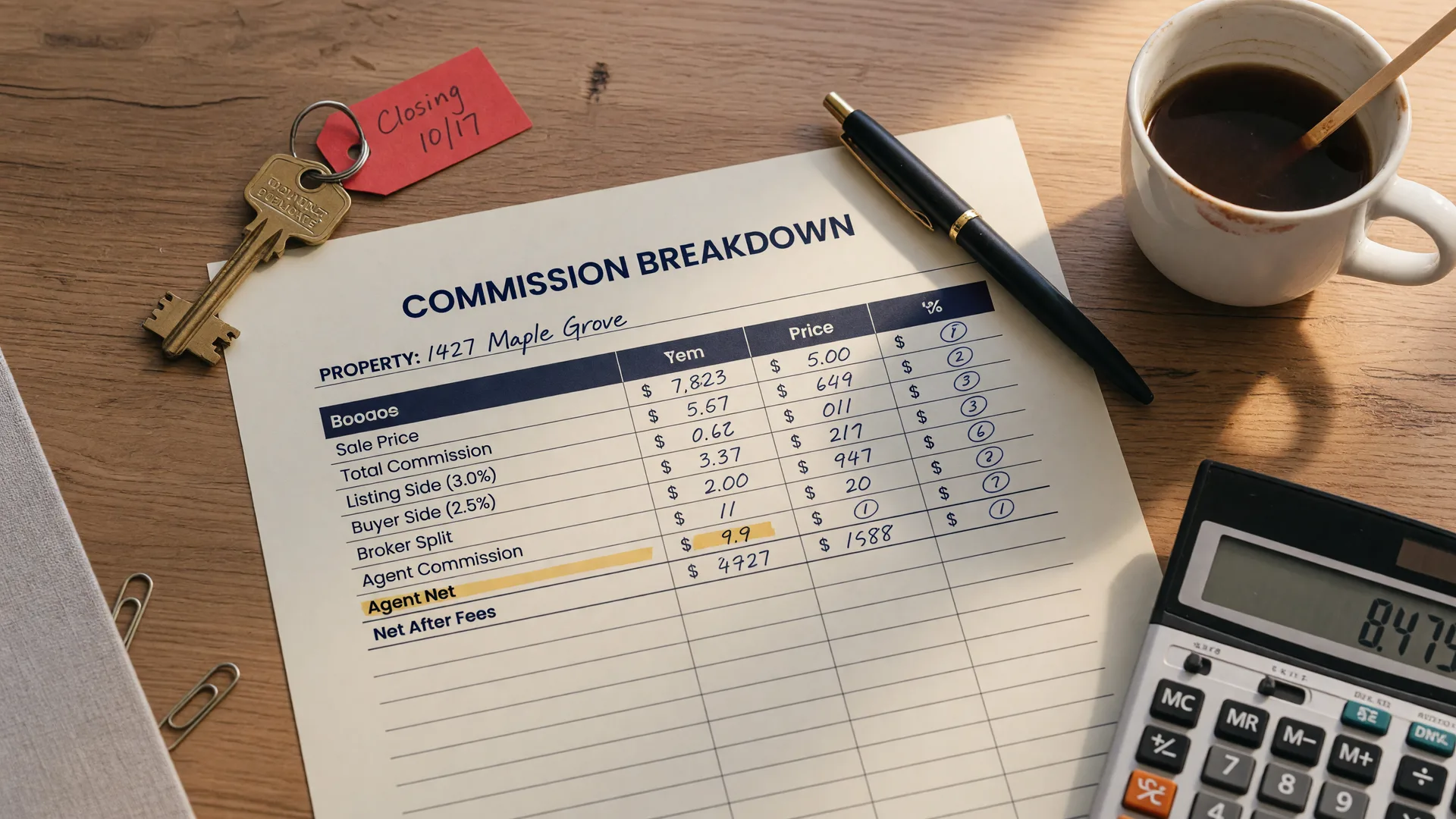
The commission is typically calculated as a percentage of the final sale price of the home. For example, if a home sells for $400,000 and the commission rate is 5%, the total commission would be $20,000. This amount is then split between the listing agent (seller's agent) and the buyer's agent.
How Are Commissions Paid?
In New Jersey, real estate commissions are almost always paid at closing. The commission is deducted from the seller's proceeds before the seller receives their net proceeds from the sale.
Here is how the flow works:
- The seller signs a listing agreement with their agent that specifies the total commission rate (e.g., 5% or 6%)
- The listing agent lists the property in the MLS and specifies the portion of the commission that will be offered to the buyer's agent
- When the property sells, the total commission is paid by the seller at closing
- The title company or closing attorney disburses the commission to the listing broker, who then splits it with the buyer's broker
- Each broker then pays their respective agent their share according to their agreement
Traditionally, the buyer's agent compensation has been paid by the seller through this split. However, recent industry changes are creating more transparency and flexibility around how buyer's agents are compensated.
What Is the Typical Commission Rate in New Jersey?
Commission rates are negotiable and vary by agent, brokerage, and market conditions. In New Jersey, the typical total commission rate ranges from 4% to 6% of the sale price, though some agents charge a flat fee or offer discounted rates.
The average commission in New Jersey is around 5% to 5.5%, which is split roughly evenly between the listing agent and the buyer's agent. However, discount brokerages and limited-service agents may offer lower commission rates.
It is important to understand that the commission is not a fixed fee set by any government agency or trade association. Every agent and brokerage sets their own rates, and you have the right to negotiate.
Recent Changes to Real Estate Commissions
In 2024, a series of class-action lawsuits against the National Association of REALTORS (NAR) and several large brokerages resulted in significant changes to how real estate commissions are structured. These changes, which took effect in 2025, have important implications for both buyers and sellers.
Key changes include:
- Buyer's agent compensation can no longer be advertised on the MLS. This means sellers can no longer see what a buyer's agent would be paid when comparing listings
- Buyers must now sign a written representation agreement with their agent before touring homes, which specifies the agent's compensation
- Buyers may be responsible for paying their agent's commission directly if the seller does not offer to cover it
- Increased transparency around commission structures and how agents are compensated
These changes are designed to give consumers more transparency and choice in how they pay for real estate services. For buyers, this means you may need to negotiate your agent's compensation upfront and understand how it will be paid. For sellers, it means you may have more flexibility in determining what you offer to buyer's agents.
Who Pays the Commission: Buyer or Seller?
The short answer is that the seller traditionally pays the commission, but the economic reality is that the buyer ultimately bears the cost through the purchase price. When a seller nets less from the sale due to commission costs, they may price the home higher to compensate.
Under the new rules, buyers may have more direct responsibility for their agent's compensation. If a seller does not offer to cover the buyer's agent commission, the buyer would need to pay their agent directly at closing. This could mean additional cash needed at closing, or it could be factored into the purchase price through negotiation.
For sellers, the commission is still paid at closing from the sale proceeds. The total commission is specified in the listing agreement, and the seller can negotiate both the total rate and what portion is offered to the buyer's agent.
Are Commissions Negotiable?
Yes. Commissions are always negotiable. There is no standard rate, and no law or regulation requires a specific commission percentage. Some agents may be flexible on their rate, especially for higher-priced homes, repeat clients, or situations where the agent can be more efficient.
However, it is important to understand what you are getting for the commission you pay. A lower commission may mean fewer services, less marketing, or less experienced support. When evaluating commission proposals, consider the full scope of services being offered, not just the percentage.
Services that commissions typically cover include:
- Professional photography, videography, and virtual tours
- MLS listing and syndication to real estate websites
- Open houses and private showings
- Pricing strategy and market analysis
- Negotiation with buyers and their agents
- Coordination of inspections, appraisals, and repairs
- Transaction management through closing
- Access to the agent's expertise, local knowledge, and network
How I Handle Commissions With My Clients
My approach to commissions is simple: full transparency from the very first conversation. Before you sign anything, I walk you through exactly how the commission works, what services are included, and what every line of the agreement means, so there are no surprises at closing.
The right commission structure is the one that fits your situation. What matters most is that you understand the full scope of what you are paying for, the marketing, the showings, the negotiation, the coordination, and the guidance through every step, and that you feel confident in the value you are receiving.
How to Evaluate Commission Proposals
When comparing commission proposals from different agents, look beyond the percentage. Here are some factors to consider:
- What specific services are included in the commission?
- What is the agent's track record in your specific market?
- How will the agent market your home or help you find a home?
- What is the agent's negotiation strategy?
- Will you be working directly with the agent or with a team?
- What do past clients say about the agent's service?
The cheapest agent is not always the best value, and the most expensive agent is not always the best. The goal is to find an agent who offers the right balance of expertise, service, and cost for your specific situation.
Frequently Asked Questions
Can I negotiate the commission rate with my agent?
Yes, commissions are always negotiable. No law or regulation sets a standard commission rate. However, understand that a lower commission may mean fewer services. Discuss what is included and what is not before agreeing to a rate.
Do I have to pay my buyer's agent directly now?
Not necessarily. Under the new rules, you must sign a representation agreement that specifies your agent's compensation. If the seller offers to cover the buyer's agent commission, that covers the cost. If not, you may be responsible for paying your agent directly. Your agent can explain the options.
What is included in a typical real estate commission?
A typical commission covers professional photography, MLS listing, showings, open houses, pricing analysis, negotiation, coordination of inspections and appraisals, transaction management, and the agent's expertise and local knowledge. The specific services vary by agent and should be detailed in your listing or buyer representation agreement.
How much commission do you pay on a $400,000 house in New Jersey?
At a typical commission rate of 5%, the total commission on a $400,000 home would be $20,000. This is typically split between the listing agent and buyer's agent, with each receiving approximately $10,000 before their broker's split. The exact amount depends on the negotiated rate and the specific agreement.
Are real estate commissions tax deductible?
For sellers, the real estate commission is typically deducted from the sale proceeds and reduces the capital gain on the sale. For buyers, the commission is not directly tax deductible, but it may be included in the cost basis of the home. Consult a tax professional for advice specific to your situation.
Want to Understand Your Options?
Commission structures can be confusing, and the recent industry changes have made it even more important to work with an agent who will explain everything clearly. I believe in transparency, not pressure. I will walk you through every cost, answer every question, and help you choose the approach that makes the most sense for your situation.

Bob Millaway
Epique Realty Agent, AI Certified Agent. 728+ homes sold across Burlington County and South Jersey. Licensed NJ Salesperson #791082.