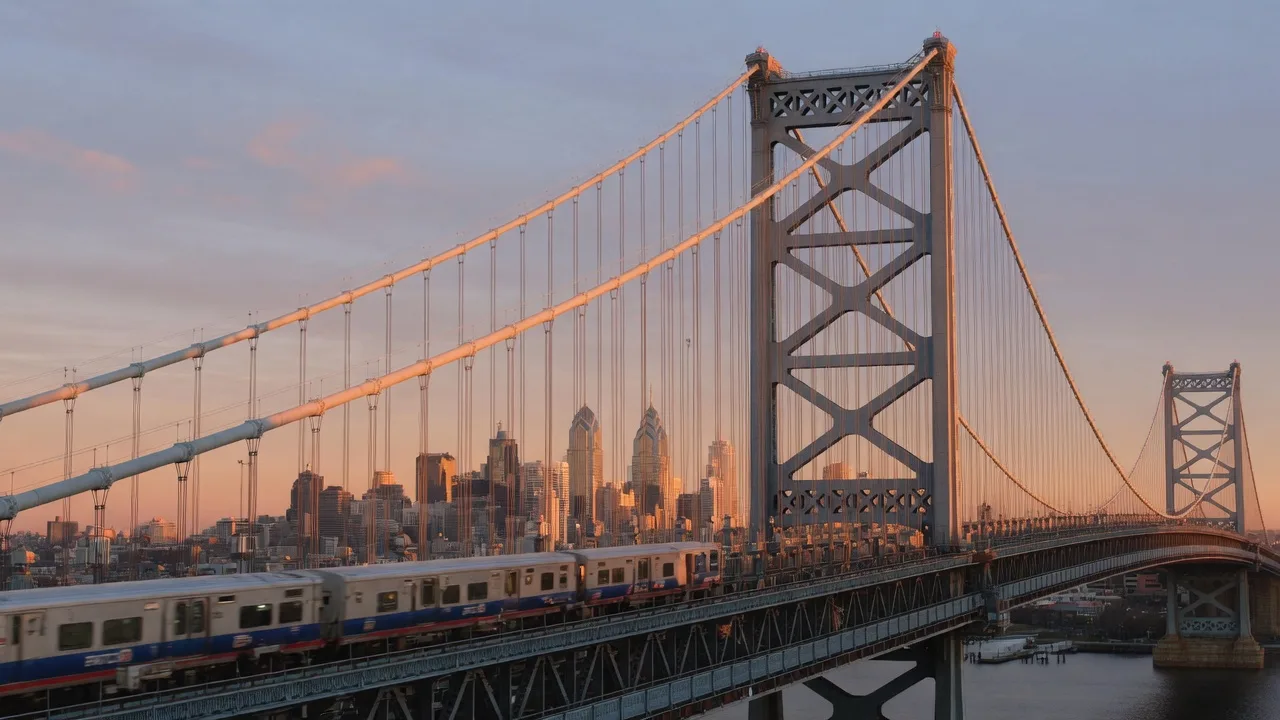
More than 100,000 people cross the Delaware River from New Jersey into Philadelphia every weekday. And for good reason. South Jersey offers significantly more space for your housing dollar, excellent schools, quieter neighborhoods, and lower cost of living, all while keeping Center City within easy reach. The question for most buyers is not whether to live in South Jersey. It is which commute option makes the most sense for their life.
Over the past 20 years, I have helped hundreds of buyers navigate this decision. I have seen every combination of commute preferences: the daily PATCO rider who walks to the station, the driver who needs a car for client visits, the hybrid worker who takes the train three days a week and drives the other two. Each commute profile points to a different set of towns and transit options. This guide covers them all.
12-40 min
Typical Commute Time
$3.00
PATCO Round Trip
24/7
PATCO Service
3
Bridges to Philadelphia
What Are Your Commute Options From South Jersey to Philadelphia?
South Jersey has four main ways to get to Philadelphia, and each one serves a different type of commuter. Here is how they compare:
PATCO Speedline
The PATCO Speedline is the fastest and most reliable way to get from South Jersey to Center City Philadelphia. The high-speed rail line runs 24 hours a day, 7 days a week, with trains every 7 to 10 minutes during peak hours. From the Woodcrest station in Cherry Hill, the ride to 8th and Market Street in Philadelphia takes about 17 minutes. From Collingswood, just 12 minutes. From Lindenwold at the end of the line, about 24 minutes.
PATCO is the gold standard for a reason. The trains are clean, frequent, and reliable. The stations are well-maintained with ample free parking at most suburban stops. And the fare is remarkably affordable: $1.40 per ride with a Freedom Card, or $3.00 for a round trip purchased on the same day.
The trade-off? PATCO only serves a specific corridor. If you live in a PATCO-served town, the commute is exceptional. If you live outside that corridor, the drive to the station may eat into your time savings. PATCO also stops at 8th and Market, 12th-13th and Locust, 15th-16th and Locust, and 9th-10th and Locust. If your office is not in Center City or near those stations, you may need a second leg of your commute.
Read my complete PATCO Speedline guide for station-by-station details.
NJ Transit
NJ Transit serves South Jersey through two main rail services: the Atlantic City Line and the Northeast Corridor Line. The Atlantic City Line runs from Atlantic City through towns like Hammonton, Atco, and Cherry Hill to Philadelphia's 30th Street Station. The Northeast Corridor Line serves Trenton, where Burlington County commuters can connect from the River LINE light rail.
NJ Transit is a good option for commuters who work near 30th Street Station or who need to reach destinations beyond Center City. The trains are comfortable and offer Wi-Fi on many routes, making them a strong choice for commuters who want to work during the ride. However, frequencies are lower than PATCO, and the service does not run 24/7.
Read my full guide to NJ Transit and other public transit options in South Jersey.
Driving
Three bridges connect South Jersey to Philadelphia: the Ben Franklin Bridge (I-676), the Walt Whitman Bridge (I-76), and the Tacony-Palmyra Bridge (Route 73). A fourth option, the Betsy Ross Bridge, connects to Northeast Philadelphia and is a good option for commuters heading to the northern parts of the city.
Driving gives you the most flexibility. You can leave when you want, take the route that works best for your destination, and have a car available in Philadelphia if you need one during the day. The trade-off is traffic, bridge tolls ($5.00 for most crossings with E-ZPass), and parking costs in Center City, which can run $200 to $400 per month.
From most Burlington County towns, the drive to Philadelphia takes 20 to 40 minutes under normal conditions. During peak hours, expect 30 to 50 minutes depending on your route and destination.
NJ Transit Buses
NJ Transit operates several bus routes from South Jersey to Philadelphia. Key routes include the 317 from Lumberton and Mount Holly, the 413 from Burlington City, the 409 from Willingboro, and the 406 from Medford and Marlton. Buses are a viable option for commuters who live near a bus stop and work near the arrival point in Philadelphia, typically the Greyhound Terminal at 10th and Filbert or the Walter Rand Transportation Center in Camden.
Bus commutes tend to be longer than train or drive commutes, but they are also more affordable and can be more relaxing if you use the time to read, catch up on email, or just zone out before the workday starts.
How Much Does It Cost to Commute From South Jersey to Philadelphia?
Commuting costs vary significantly by mode. Here is a realistic breakdown:
| Expense | PATCO | Driving | NJ Transit |
|---|---|---|---|
| Daily cost | $3.00 | $10-15 (toll + gas + parking) | $8-14 |
| Monthly cost | $66 | $400-700 | $175-310 |
| Annual cost | ~$790 | $4,800-8,400 | $2,100-3,720 |
Estimates based on 5-day work week, 48 weeks per year. Driving costs include bridge toll, gas, and parking. Actual costs vary by specific route and parking situation.
The savings from taking PATCO versus driving add up fast. A PATCO commuter saves roughly $4,000 to $7,500 per year compared to a driver. Over a 10-year career, that is $40,000 to $75,000 in savings, enough to make a meaningful difference in your housing budget.
Which South Jersey Towns Have the Best Philadelphia Commute?
The best commuter town depends on your commute mode, your budget, and your lifestyle preferences. Here is a quick guide:
- Collingswood: 12-minute PATCO ride, walkable downtown, homes from $325K to $600K. Best for train commuters who want a vibrant, walkable community.
- Haddonfield: 15-minute PATCO ride, historic downtown, top schools, homes from $500K to $1M+. Best for premium lifestyle with train access.
- Cherry Hill: 17-minute PATCO ride from Woodcrest station, excellent schools, homes from $350K to $800K. Best for families who want PATCO access and suburban amenities.
- Cinnaminson: 25-minute drive, River LINE access, excellent schools, homes from $350K to $650K. Best for families who want river town living with a flexible commute.
- Mount Laurel: 20-30 minute drive, highway access, excellent schools, homes from $300K to $700K. Best for drivers who want maximum flexibility.
- Moorestown: 30-minute drive, top-ranked schools, historic downtown, homes from $535K to $787K+. Best for families who prioritize schools over transit access.
Read my full guide to the best commuter towns in South Jersey.
What Is the Best Time to Commute From South Jersey to Philadelphia?
Timing matters. If you can adjust your schedule by 30 minutes in either direction, you can significantly improve your commute experience:
- 7:00-8:30 AM: Peak rush hour. PATCO trains are most frequent (every 7-10 minutes) but also most crowded. Bridge traffic is heaviest.
- Before 7:00 AM: Light traffic on roads, less crowded trains. If you can start work early, this is the ideal window.
- 8:30-9:30 AM: Shoulder period. Traffic eases, trains are less crowded. A good compromise if you can start work at 9:30 or 10:00.
- After 9:30 AM: Off-peak. Trains run every 15-20 minutes. Roads are clear. Parking is plentiful at stations.
The reverse commute (from Philadelphia to South Jersey) is significantly lighter in both directions. If you live in South Jersey and work in Philadelphia, you are going against the heaviest traffic flow in the morning, which means less congestion than the reverse.
How to Make Your Commute Work Better
Over the years, I have picked up a few strategies that make the South Jersey to Philadelphia commute more manageable:
- Live within walking distance of a PATCO station. The time you save driving to the station and finding parking is real. Homes near PATCO stations tend to hold their value better and appeal to future buyers.
- Test your commute before you buy. Do the actual commute from the town you are considering during peak hours at least twice. What looks good on paper may feel different in practice.
- Consider a hybrid approach. Many commuters drive two days a week and take the train three days. This gives you flexibility while keeping your transit costs manageable.
- Factor parking costs into your budget. If you drive to Philadelphia, monthly parking in Center City adds $200 to $400 to your monthly expenses. That is equivalent to $40,000 to $80,000 in mortgage buying power.
- Join a vanpool. South Jersey has several vanpool programs that can reduce your costs and let you use the HOV lanes on the bridges.
Frequently Asked Questions
How long does it take to commute from South Jersey to Philadelphia by train?
By PATCO, 12 minutes from Collingswood, 15 minutes from Haddonfield, 17 minutes from Woodcrest (Cherry Hill), and 24 minutes from Lindenwold. By NJ Transit Atlantic City Line, about 30 to 45 minutes from Cherry Hill to 30th Street Station.
How long does it take to drive from South Jersey to Philadelphia?
From most Burlington County towns, 20 to 40 minutes in normal traffic. During peak rush hour, expect 30 to 50 minutes. The Tacony-Palmyra, Ben Franklin, and Walt Whitman bridges all connect South Jersey to Philadelphia.
Is PATCO or NJ Transit better for commuting to Philadelphia?
PATCO is better for Center City destinations. It is faster, more frequent, cheaper, and runs 24/7. NJ Transit is better if you work near 30th Street Station or need to travel beyond Center City. Many commuters use both depending on their schedule.
What is the cheapest way to commute from South Jersey to Philadelphia?
PATCO is the cheapest option at $3.00 per round trip with a Freedom Card. NJ Transit monthly passes offer good value for frequent riders. Driving is the most expensive option when you factor in tolls, gas, and parking.
Which South Jersey town has the shortest commute to Philadelphia?
Collingswood has the shortest PATCO commute at 12 minutes to Center City. Palmyra and Riverton have the shortest drive times at 15 to 20 minutes via the Tacony-Palmyra Bridge.
Does PATCO run 24 hours?
Yes, PATCO runs 24 hours a day, 7 days a week. Trains run every 7-10 minutes during peak hours, every 15-20 minutes during off-peak daytime hours, and every 30-40 minutes overnight. This makes it one of the most reliable commuter rail options in the country.
How much does it cost to park at PATCO stations?
Parking at most PATCO stations is free. Woodcrest, Ashland, and Lindenwold have large Park-and-Ride lots with free parking. Some stations have paid parking or permit requirements, so check the specific station before you commit.
Bob Millaway
Epique Realty Agent and AI Certified Agent with over 20 years of experience helping families find the right South Jersey community for their commute. License: Salesperson · 791082 · NJ
About Bob