
Hidden Stress for Downsizers: Discover the Truth Today
The Hidden Stress Downsizers Don't Talk About
By Robert "Bob" Millaway, AI Certified Agent™ & South Jersey Lifestyle Specialist

I've sat at a lot of kitchen tables in South Jersey over the years. And there's one thing I notice every time I meet with someone who's thinking about downsizing: they talk about square footage, taxes, maintenance costs, and "getting rid of stuff."
What they don't talk about, at least not at first, is how much it actually hurts.
The Weight No One Mentions
Downsizing sounds practical. It sounds smart. It sounds like something you should celebrate. But when you're the one staring at 30 years of memories packed into closets, basements, and garages, it doesn't feel practical. It feels overwhelming. And most people feel guilty for even admitting that.

There's this invisible stress that comes with downsizing, and it's rarely about the house itself. It's about deciding what gets to come with you and what gets left behind. It's about looking at your daughter's baby clothes, your late father's toolbox, or the dining room table you bought when you first got married, and trying to put a value on something that was never meant to be valued that way.
And nobody talks about it because we're all supposed to be logical about real estate decisions. But this isn't just real estate. It's your life.
The Paralysis of Too Many Choices
Here's what I see happen: people think about downsizing for months, sometimes years, but they don't actually start the process. They avoid opening the attic door. They walk past the spare bedroom full of boxes. They tell themselves "next weekend" over and over again.
It's not laziness. It's not procrastination. It's decision fatigue before the decisions even start.
When you've accumulated decades of belongings, the sheer volume of choices you have to make becomes paralyzing. Keep it or donate it? Sell it or give it away? Store it or let it go? Multiply that by thousands of items, and it's no wonder people freeze up.
The overwhelm doesn't get better by avoiding it. It gets worse. And then the shame creeps in. You start thinking, "Why can't I just deal with this like a normal person?" But here's the truth: there is no normal person when it comes to downsizing. Everyone struggles with it. You're just the only one brave enough to admit it.
The Grief Nobody Expects
One of the most underestimated parts of downsizing is the grief. And I don't mean the kind of grief where someone passed away (though that's often part of the story too). I mean the grief of closing a chapter.

Leaving the house where you raised your kids, hosted Thanksgiving dinners, and built your life feels like saying goodbye to that version of yourself. And society doesn't give you space to feel sad about it. Everyone says, "Congratulations on your new condo!" or "You're going to love having less to clean!" And they mean well. But it doesn't leave room for the fact that you might also feel sad, confused, or even a little lost.
I've had clients sit across from me and tear up while talking about their homes. Not because they're attached to the walls and floors, but because those walls and floors hold their memories. That's not something you "get over." It's something you move through, and that takes time and space.
Research shows that downsizing can trigger sadness, anxiety, temporary depression, and sleep problems. Those are real responses to a major life transition. And the more we pretend they don't exist, the harder the process becomes.
The Control Factor
Here's something else I hear often: "My kids are telling me what I should keep."
Or: "My doctor says I need to move."
Or: "We can't afford to stay here anymore."
All of those might be true. But when downsizing feels forced, it doesn't feel like a fresh start. It feels like losing control over your own life. And that loss of autonomy, more than the physical act of moving, is what really stings.

People need to feel like they're making the choice, even if the circumstances are pushing them in a certain direction. That's why I never start with listings. I start with a conversation. What do you actually want? What are you afraid of? What would make this feel less overwhelming?
Sometimes the answer is staying put and making modifications. Sometimes it's selling but renting back for six months so you have time to figure out the next step. Sometimes it's using AI-powered market analysis to understand exactly what your options are, so you're making decisions from a place of clarity instead of fear.
Control doesn't come from having all the answers. It comes from knowing you have a say in what happens next.
Why a Plan Changes Everything
I'm a big believer in starting with strategy, not stress. And by strategy, I mean a clear, step-by-step plan that accounts for both the logistics and the emotions.
A good downsizing plan doesn't just tell you when to list your house. It tells you:
What you need to do before you list (and what you can skip)
How to handle the belongings you're not taking with you
What your timeline actually looks like, not what some generic article says it should be
What your housing options are, based on real numbers and real availability
Who's going to help you through the process so you're not doing it alone
When people have that kind of clarity, the invisible stress starts to lift. Not because the work disappears, but because the unknown becomes known. And the unknown is always scarier than the thing itself.
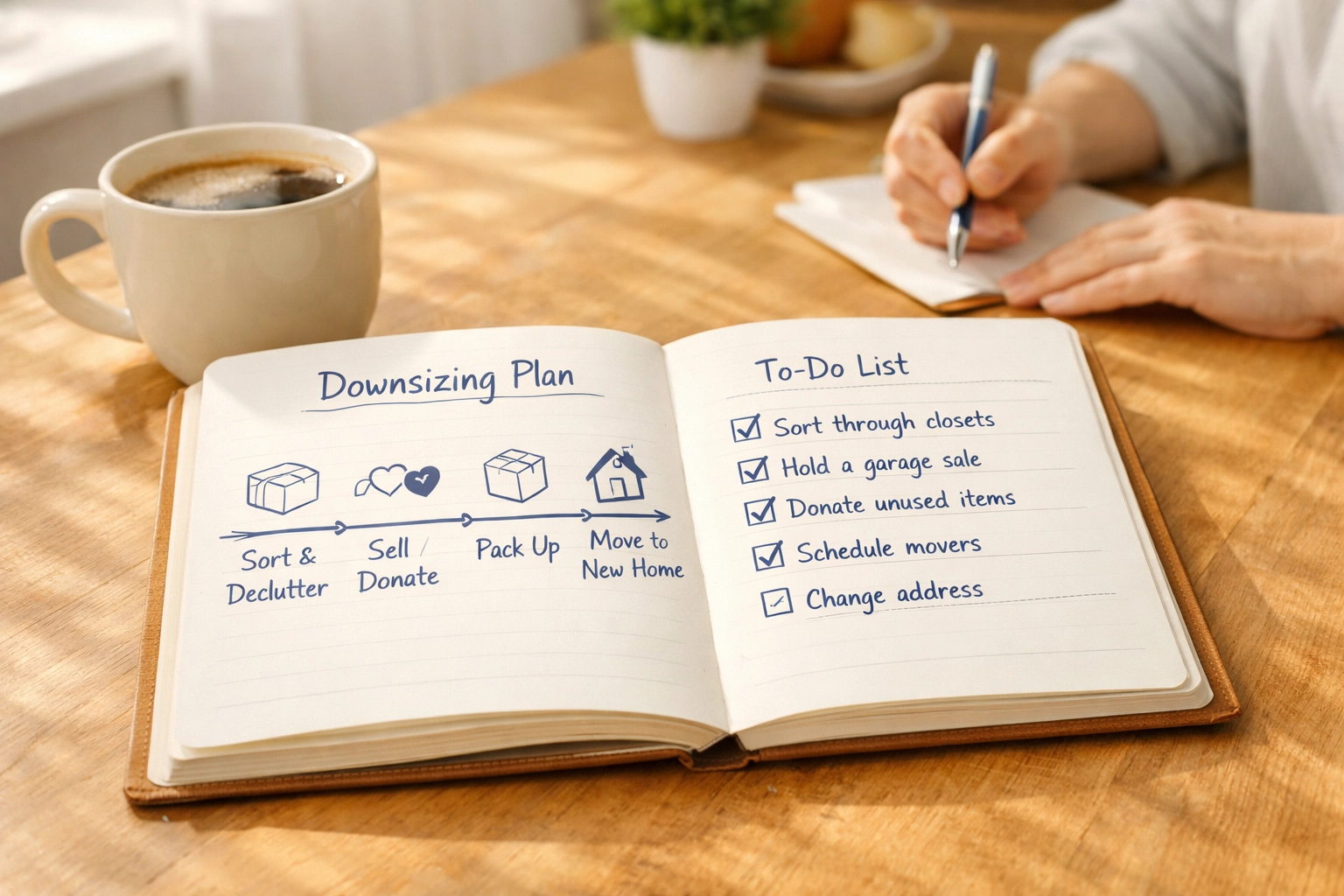
At The Millaway Group, we use AI tools to map out scenarios in real time. What happens if you sell now versus six months from now? What does the market look like in the towns you're considering? How do your equity and your budget line up with your next move? Those answers used to take weeks to figure out. Now we can model them in a single meeting.
And that's not about replacing the human side of this work. It's about protecting it. The less time you spend guessing about market conditions or second-guessing your timeline, the more energy you have to focus on what actually matters: making peace with the transition.
You Don't Have to Pretend It's Easy
If you're thinking about downsizing and it feels heavier than you expected, you're not broken. You're normal. This is a big deal. It's supposed to feel like a big deal.
But it doesn't have to feel impossible.
I've watched people go from completely overwhelmed to genuinely excited about their next chapter. The difference wasn't that they stopped caring about their old home. The difference was that they had a plan, they had support, and they gave themselves permission to feel whatever they needed to feel along the way.
If you're sitting at your own kitchen table right now, staring at a decision you've been avoiding, let's talk. Not about listings. Not about comparables. Just about what's actually going on and what would help.
Sometimes the first step isn't packing a box. It's admitting you need a roadmap.
Final Thoughts
Downsizing is emotional work disguised as logistical work. The hidden stress isn't about finding a smaller house. It's about letting go of the life you built in the one you're leaving. And that deserves more than a quick fix or a one-size-fits-all timeline.
If you're ready to start the conversation, or if you just want to know what your options look like without any pressure, reach out. I've been having these kitchen table talks across South Jersey for years, and I can promise you this: you're not the first person to feel this way, and you won't be the last.
But you will get through it. And it can feel a whole lot calmer than you think.


